Unlocking the full potential of your Amazon KDP books requires more than just captivating content, it demands a sophisticated approach to keyword research. In this guide to advanced Amazon keyword research strategies, you’ll discover the actionable techniques top publishers use to outsmart competitors, boost visibility, and drive organic sales. Whether you’re a seasoned self-publisher or aiming for your first bestseller, these proven keyword tips and market insights will empower you to find untapped opportunities, optimize your listings, and maximize profits. Dive in to transform data-driven research into real publishing results with BookBeam as your trusted tool.
Key Highlights
- Advanced Amazon keyword research transforms self-publishing by using analytics to drive visibility, niche selection, and sales growth.
- BookBeam helps publishers validate profitable niches and optimize keywords with actionable, data-driven Amazon market insights.
- Competitor analysis, including tracking keywords and monitoring market movements, refines your keyword approach for enduring success.
- Integrating backend keywords and advanced research techniques boosts Amazon listing visibility and organic discovery.
- Continuous keyword optimization, using analytics tools and evolving strategies, maximizes Amazon KDP sales and publishing results.
Unlocking Advanced Amazon Keyword Research: Why Powerful Analysis Matters for Self Publishers
Harnessing the full scope of advanced Amazon keyword research strategies transforms the publishing journey from guessing games to data-driven results. Self publishers who prioritize effective keyword research and analytics achieve greater sales, smarter optimization, and robust Amazon SEO. The difference between a stagnant listing and a thriving sales record often comes down to choosing the right research methods, using specialized tools, and adopting a reliable keyword strategy that balances both backend keywords and visible keywords for your Amazon listings. It’s not just about amassing a keyword list; it’s about understanding search volume, performance metrics, and how campaigns leverage those keywords. Whether you’re new to Amazon KDP or scaling up, a commitment to powerful analysis will give you an edge, unlocking real opportunities hidden within the enormous Amazon marketplace.
The Impact of Informed Keyword Strategy on Amazon KDP Success
Let’s get right to the core of what separates thriving Amazon self publishers from the rest: a meticulous, informed keyword strategy. You can publish a beautifully written book, but if readers can’t find it, sales will stagnate. That’s where advanced Amazon keyword research strategies make all the difference. Amazon KDP isn’t just a platform, it’s a vast, dynamic market where thousands of new titles compete for attention every day. To rise above the noise, you need optimization rooted in analytics, real research methods, and a commitment to ongoing advanced keyword refinement.
Start by understanding that effective keyword research isn’t guesswork. It connects your book directly to reader intent. Discovering high-impact keywords goes well beyond simply brainstorming words related to your content. You’ll want to use several ways to gather data: analyzing search volume, evaluating competition, reviewing Amazon PPC campaigns, and learning from successful books in your genre. Tools and analytics dashboards like those on BookBeam empower you to see which keywords drive the most visibility, and which ones might be saturated or declining. This gives you a real-time advantage when you’re crafting your keyword list and adjusting your Amazon listings.
Consider the metrics that really matter: search volume, competition levels, click-through rates, and conversion rates. A niche keyword that attracts the right audience is far more valuable than a popular keyword that brings untargeted traffic. For instance, targeting “gratitude journal for teens” may yield better results than “journal” because it aligns more closely with a specific reader intent. Backend keywords and advanced keyword optimization techniques mean you don’t have to rely solely on highly competitive broad terms. Instead, you’ll tap into pockets of demand, low-hanging fruit that can generate consistent sales even before you climb to the top of main category searches.
Another critical aspect is ongoing optimization. Amazon SEO isn’t static; what works today might be obsolete in a few months. Regularly reviewing your keyword performance with analytics lets you tweak your listing, update backend keywords, and refresh campaigns. By staying agile, you respond to shifts in reader preferences and algorithm changes. This proactive approach ensures your book keeps gaining traction without requiring massive relaunches or costly advertising campaigns.
Now, let’s talk about the actionable benefits. With an informed keyword strategy, you’re not just improving your Amazon KDP sales, you’re building a sustainable, data-driven publishing business. You’ll spot emerging trends before competitors, validate new book ideas based on real search demand, and allocate your promotional budget effectively with Amazon PPC that actually converts. Every keyword becomes a lever for optimization, boosting organic rankings, fueling advertising campaigns, and strengthening the backbone of your entire Amazon ecosystem.
Advanced Amazon keyword research strategies also pay dividends when you’re attempting to diversify your portfolio. By analyzing which keywords drive success in one book, you can replicate, and even scale, that success across future projects. Every listing becomes a learning ground, feeding back valuable market insights that inform not just what you publish, but how you position and market it.
To sum it up, advanced keyword analytics are about much more than just visibility, they’re about crafting a repeatable process for sustained growth. By embracing advanced research methods, utilizing the right tools, and remaining consistent with ongoing optimization, self publishers unlock the true sales potential of their Amazon listings. The foundation of lasting success on Amazon is a flexible, data-driven keyword strategy that’s always a few steps ahead of the competition, paving the way for smarter, faster, and far more profitable publishing decisions.
Discovering Profitable Niches: Using Amazon Data to Validate Book Ideas
Landing on a truly profitable niche is the secret for Amazon KDP self publishers who want to scale their sales without burning out. Leveraging Amazon data and analytics, savvy authors now use research methods that go far beyond simple guesswork, zeroing in on high-demand, low-competition spaces that can sustain long-term publishing income. With the right tools, like BookBeam, you can analyze essential market metrics, validate keywords, and identify what readers really want before you even outline your next book. In this way, every new project starts with confidence, strategic insight, and a roadmap rooted in data, ensuring your next book isn’t just written, but found and profitable.
BookBeam’s Role in Identifying High-Demand, Low-Competition Niches
For Amazon KDP publishers serious about eliminating trial and error, BookBeam stands out as an essential ally. Gone are the days when a hit-or-miss keyword was enough to drive sales, today, advanced keyword research strategies demand precise analytics, actionable sales metrics, and a keen understanding of how Amazon keyword algorithms work in real time. BookBeam delivers all of these, offering a purpose-built suite of tools that helps you uncover profitable niches, validate demand, and make smarter publishing decisions before you commit to a project.
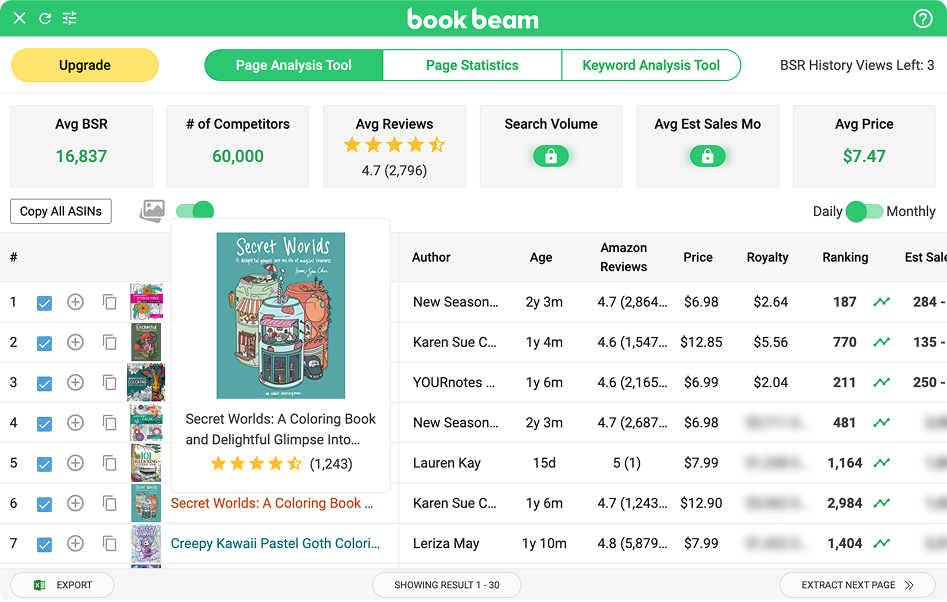
Let’s break down why BookBeam is indispensable for modern Amazon keyword research and niche discovery. At its core, BookBeam’s analytics engine scans massive pools of Amazon data, the latest sales trends, live keyword search volumes, and real-time market fluctuations. Rather than just compiling a generic keyword list, BookBeam uses research methods rooted in actionable optimization insights: what keywords are trending up, which keywords pull traction in listings and campaigns, and which competitive keywords are oversaturated and best avoided. This immediate access to granular market metrics means you’re not just guessing, you’re validating your book ideas with solid, current data.
But how does this translate to practical results? Let’s say you’re considering a new niche, like “gratitude journals for teens.” Before writing, plug the topic’s relevant keywords into BookBeam’s keyword tracker and analytics dashboards. You’ll quickly see data points for search volume, sales potential, and listing competition. High-demand, low-competition keywords emerge, ones that indicate robust reader interest but aren’t already dominated by dozens of bestsellers. For savvy publishers, this is the moment of validation: real Amazon data confirming market demand. That’s the difference between launching a book that quietly flops and one that consistently brings in sales.
Effective keyword research also depends on knowing what to avoid. BookBeam’s analytics reveal which keyword strategies your top competitors are using while mapping out backend keywords that might be overlooked by surface-level research. Instead of targeting only the obvious traffic-heavy keywords, you discover several ways to carve your own lane, targeting nuanced long-tail search terms that larger publishers may have missed. This methodology isn’t just about optimization, it’s about strategic differentiation, letting you avoid a crowded fight for highly competitive keywords.
One of BookBeam’s most powerful features is its ability to synthesize varied research methods into one simple workflow. You analyze keywords, validate niche demand, track sales momentum, and monitor the ever-changing market, all under one dashboard. This consolidated, data-centric approach removes months of manual research and ambiguity, delivering insights that fuel quick, informed publishing decisions. BookBeam doesn’t just highlight what’s possible, it helps publishers prioritize which ideas are truly worth their creative and financial investment. The process makes validation second nature, ensuring each new book you launch is backed by hard data, not blind faith.
BookBeam’s benefits don’t end at validation, they extend into ongoing optimization and competitive analysis. As Amazon listings and sales data evolve, BookBeam’s keyword tracker lets you continuously refine your campaigns, adjusting based on real market movements. You’re empowered to optimize both your public listings and backend keywords, keeping sales performance strong even as niches mature or competitors adapt their keyword strategies.
For aspiring and active self publishers, actionable tips emerge from consistently using BookBeam: always begin with a thorough keyword research session using analytics tools, monitor your market’s search volume and metrics regularly, and let competitive keyword analysis shape how you structure your books, listings, and promotional campaigns. When your publishing model runs on data rather than hunches, you eliminate wasted effort and build a business that grows on repeatable, measurable wins.
Ready to level up your publishing career? Don’t leave your next book idea to chance, use BookBeam’s analytics-powered platform to validate your niche, optimize your keywords for high-demand, low-competition positions, and unlock the true market potential inside Amazon’s vast ecosystem. When you let analytics guide your decisions, you’re not just playing the Amazon game, you’re setting the rules. Try BookBeam today to see how advanced research methods can revolutionize your publishing results and turn every new title into your next bestseller.
Exploring Competitive Keywords: How to Analyze Top-Performing Book Markets
Diving deep into competitive keywords and market analytics is what separates the average Amazon KDP publisher from those who build enduring, profitable publishing businesses. At this stage, it’s crucial to understand exactly how your competitors leverage keyword research, analytics, and optimization to claim top-performing positions. You’ll uncover why ongoing competitor analysis is imperative for anyone serious about dominating Amazon’s ever-evolving market. From reverse ASIN lookups to using advanced keyword research tools, these strategies allow you to dissect winning listings, track market movements, and refine your keyword strategy based on data-driven insights. The next step involves learning how to continuously monitor your competitors to sharpen your own keyword approach.
Tracking Your Amazon Competitors to Refine Your Keyword Approach
Successful Amazon KDP self publishers know that competitor analysis is much more than watching what other books do, it’s a rolling process of tracking, learning, and outmaneuvering by leveraging a toolkit built around competitive keywords, keyword research, and robust analytics. In saturated Amazon markets, only those who understand the nuances of competitor keyword strategy and ongoing optimization can expect sales growth that lasts. Here’s how to break down and utilize real data to tune your keyword approach and make every campaign count.
First, it’s essential to build your process around identifying who your real competitors are. These aren’t always established publishers or bestsellers, they’re the books consistently ranking on targeted keywords you want to own. Start with reverse ASIN research: use tools that analyze your top competitor’s listings, pulling performance data, their chosen keywords (including backend keywords), and even their Amazon SEO playbook. You’ll discover precisely which top-performing keywords earn them visibility and sales. Through analytics, you’ll notice trends in campaigns, spot gaps in their keyword coverage, and uncover opportunities for advanced keyword optimization where they may be falling short.
Next, leverage dedicated analytics and keyword tracker tools, such as those offered by BookBeam, to go beyond surface-level keyword analysis. Set up alerts or dashboards to track how competitors’ keyword rankings fluctuate over time. If you see a listing surge on a specific keyword, dig into their optimization tactics: look at their frontend keyword placement, backend keyword choices, and the style of their listings. Analyze which metrics are changing (such as review frequency, average sales, or campaign velocity), as these often link directly to shifts in their keyword strategy. This real-time feedback allows you to adapt quickly, iterating your own keywords and listings before trends become saturated across the broader Amazon market.
Understanding search volume is also key. Many markets are filled with high-volume, highly competitive keywords that seem attractive but may not actually drive sales when dominated by established players. Your job with advanced keyword research methods is to find the intersection: keywords your successful competitors underutilize that still show strong search volume and tangible sales results. Use analytics to compare several listings side-by-side, ranking their keywords by performance and relevance, not just frequency or generic popularity, this is where the hidden profit lies.
Don’t overlook the power of ongoing competitor analysis to avoid common blind spots. Some publishers make the mistake of assuming their initial keyword set, or single research session, is enough. Yet, as competitors update their campaigns, listings, and even backend keywords, the keywords that drive results can shift dramatically. Continually reviewing competitors ensures your keyword research never becomes obsolete. With tools such as keyword trackers and data-rich analytics dashboards, self publishers can set up automatic monitoring for new keyword trends, search volume movement, and sales patterns within their niche. This level of automation transforms keyword optimization from a static task to a dynamic, repeatable advantage that scales as you publish more books.
For those ready to take their Amazon KDP business seriously, practical actions include regular competitor analysis sprints, review listing updates, campaign launches, and sudden sales spikes for all relevant competitors. Map out their advanced keyword usage, catalogue their high-performing keywords, and run your own comparison analytics to identify what you can adopt or improve. Integrating this keyword research process into your publishing workflow, with the support of specialized tools, compresses months of trial and error into quick, reliable decision making.
BookBeam is purpose-built to support this process. With integrated analytics, keyword trackers, and market research tools specifically for Amazon self publishers, you can automate your competitor analysis, track performance metrics, and seamlessly incorporate new, high-impact keywords into your optimization strategy. This ensures you’re continually refining your listings, backend keywords, and campaigns based on what truly works within your live market, not just industry generalities.
Ready to optimize for lasting results? Make sure competitor analysis and tracking are fundamental components of your routine. Use the right research methods, analytics, and keyword tools, then let actionable insights guide every update to your listings. When you focus on the fundamentals, you’ll see real-world improvements in rankings, sales, and Amazon keyword dominance across all your publishing projects.
Mastering the Art of Amazon Keyword Selection for Maximum Visibility
Choosing the right Amazon keyword strategy can mean the difference between your book getting lost in the crowd or consistently ranking where buyers discover it. Advanced keyword research relies on smart analytics, honing in on tail keywords, analyzing backend keywords, and maintaining a tight focus on metrics like search volume and conversion rates. By mastering optimization and leveraging modern research methods, self publishers elevate their listings, driving sustainable sales and competitive campaigns. Integrating backend keyword insights with advanced optimization tools unlocks deeper visibility, allowing your listing to rise above the competition and reach your true audience effectively.
Integrating Backend Keywords and Advanced Keyword Techniques for Enhanced Discovery
Integrating backend keywords with advanced Amazon keyword research techniques is no longer optional for anyone serious about growing sustainable sales through Amazon KDP. Setting yourself apart in the Amazon marketplace requires a level of sophistication that blends research methods, analytics, and real-world optimization for every keyword you target. Let’s break down how backend keywords and advanced keyword strategies can change the game for your listings, and how you can immediately put these lessons into practice with your Amazon KDP projects.
First off, understand the unique role backend keywords play in your Amazon listings. These are hidden fields in your Amazon dashboard that inform Amazon’s search engine about what your book is related to, without cluttering up your customer-facing content. Unlike visible title keywords or keyphrases that must appeal to readers and fit naturally in your listing copy, backend keywords work solely for Amazon’s algorithm. That’s your chance to use synonyms, tail keywords, misspellings, and even international variations you wouldn’t want front and center but still attract real search traffic. Savvy publishers obsess over backend keyword optimization because it directly impacts how often and where your book appears in search results.
But here’s the thing: backend keywords alone can’t drive results without a broader data-driven strategy. That’s where analytics and advanced keyword research methods step in. Every time you select an Amazon keyword, you should check the search volume, competition, and historical sales metrics for that term, using the right keyword tools. BookBeam is tailored for this, letting you test dozens of backend keywords, measure which ones move the needle, and adjust quickly, optimizing your backend fields before you even publish.
You’ll want to move beyond obvious keywords. Focus your research on long tail keywords, very specific phrases that zero in on buyer intent. For example, “anxiety workbook for teens” or “guided gratitude journal for busy moms” are much more likely to convert than broad, competitive terms like “journal.” Research methods should include both analyzing Amazon’s own autofill suggestions and mining insights from high-performing competitors using analytics dashboards. When paired with backend keywords, these long tail options often quietly fuel the majority of your organic visibility.
Optimization is ongoing, not a “set it and forget it” exercise. Testing different backend keywords over time, reviewing which terms correlate with the largest upticks in sales and impressions, and refining your list as trends evolve is key. The Amazon algorithm shifts frequently; what’s effective in your listing now may need an update with the next data cycle. Advanced keyword campaigns often require cyclical research, weighing fresh search volume data against your listing performance, and BookBeam makes that process seamless by monitoring and flagging underperformers.
Now, pay careful attention to the analytics, the central dashboard for any keyword strategy. Track not just raw sales but also the key metrics for each keyword: search volume trends, click-through rates, and conversion data. Uncover which backend keywords quietly produce spikes in visibility, and which simply don’t deliver. Analytics-driven optimization means that every backend keyword you use justifies its spot by delivering measurable traffic or sales, not just because it sounds relevant.
As competition heats up, it’s the publishers who layer backend keywords with a broader suite of advanced keyword techniques, like grouping related keywords into thematic clusters and A/B testing combinations in their backend fields, who see Amazon SEO results skyrocket. Remember, listing optimization is about building a solid foundation, but backend keywords are the secret framework supporting it. Incorporate misspellings, regional differences, tail keywords, and alternative phrasings in your backend, updating regularly as analytics suggest new high-value opportunities.
Finally, make backend keyword integration part of every major listing update. Whenever you launch a new campaign, revise your book’s description, or identify a trending tail keyword, sync those insights into both your visible listing and backend keyword fields. BookBeam’s tools make it simple to track these adjustments and measure their impact, transforming guesswork into repeatable success.
Ready to move beyond basic optimization? Start with a thorough backend keyword review, double down on analytics, and adopt advanced keyword techniques, tail keywords, thematic clusters, mispellings, and rotating updates. That’s how top KDP publishers cut through the noise, maximize listing visibility, and drive sustainable Amazon sales. Experiment, measure, iterate, and let BookBeam’s research methods empower you to uncover the best possible keyword strategy, both front and back, for every book you launch.
Optimizing Your Amazon Listings: Practical Steps for Greater Book Sales
Unlocking greater book sales on Amazon isn’t about luck, it’s about mastering the fundamentals of listings optimization, leveraging analytics, and acting on advanced keyword strategies. When you know how to systematically research, select, and deploy both backend and frontend keywords, every aspect of your Amazon listing, from the title to your book description, gets turbocharged for conversion. This approach means relying on actionable data, modern keyword tools, iterative optimization, and ongoing metrics tracking. Learn how top publishers blend long tail keywords, competitive keywords, and backend strategies into their titles and descriptions, ensuring each campaign and listing you launch is built to maximize visibility and sustainable sales.
Top Amazon Keyword Tips for Crafting Compelling Titles and Descriptions
Creating compelling Amazon book listings begins with an in-depth keyword research mindset that’s firmly rooted in optimization and analytics. The first principle: your book’s title is your billboard, and your description is the closing sales pitch. Both need to pack in relevance, appeal, and SEO punch. Start with a comprehensive keyword list, drawn from advanced keyword research using both automated tools and manual review of high-performing listings in your niche. Don’t just pick the most obvious keywords; focus on those that meet the trifecta, high search volume, lower competition, and strong buyer intent.
Unlocking these opportunities means combining multiple research methods. Use keyword tracker and analytics platforms, like BookBeam, to analyze real-time data on what’s driving sales in your category. Metrics like conversion rates, click-through rates, and organic ranking shifts all inform which keywords are most effective. Create a prioritized keyword strategy: select long tail keywords for your title and main product description, as these cater to specific searches that indicate buyers know what they want. For example, instead of just “self-help book,” use “practical self-help guide for young adults,” which hits both advanced keyword depth and direct buyer queries.
Your title’s optimization has to walk a tightrope: it should integrate the seed keyword naturally, but never look like it’s been stuffed. Amazon’s algorithm is tuned for relevance, so center your main target keyword upfront in the title, then layer in related long tail phrases where they fit smoothly. Remember, successful listings treat backend keywords and visible fields as parts of one ecosystem, a synergy that ensures you don’t cannibalize keyword value. This dual-layer approach pays off in both visibility and conversion, expanding your reach across both broad and targeted searches.
Book descriptions, on the other hand, are an underutilized weapon in listings optimization. Here, naturally weave in a handful of carefully selected competitive keywords, long tail keywords, and secondary phrases that are trending. Sprinkle in backend keywords conceptually (using synonyms, variations, and region-specific terms) to maximize relevance without repeating the title keywords verbatim. Use analytics from BookBeam to monitor which descriptive keyword sets deliver the most engagement and update frequently, optimizing for metrics like read-through and add-to-cart rates.
Dive even deeper with A/B testing tools to rotate various versions of your title, subtitle, and first paragraph of your description. Track how each variant impacts rankings, sales, and time-on-page using your analytics suite. When a tweak leads to a spike in key metrics, double down and roll those insights across your other listings. Consistency in experimenting and reviewing performance is what keeps your Amazon keyword strategy way ahead of static, set-it-and-forget-it publishers.
Backend keyword fields are essential to ultimate optimization, but don’t overlook the power of integrating advanced keyword research into your customer-facing content. Listing optimization isn’t just about ticking the SEO box, it’s about showing up for the right search terms and converting visitors into buyers. Use keyword tools to surface competitive keywords and analyze your listing against top competitors, adjusting your primary and secondary keyword choices as you monitor ongoing campaigns and resulting sales.
Finally, always keep an eye on evolving Amazon SEO trends and consumer search behavior. Iterate your listings according to analytics data, new keyword research, and campaign outcomes. A practical tip: set calendar reminders for periodic reviews of your highest-selling listings, update backend keywords, refresh titles and descriptions with relevant, data-backed keywords, and leverage every insight from competitor campaigns. This iterative, data-powered cycle is what unlocks sustained listing performance and reliable sales momentum.
Ready to make every Amazon KDP listing your best yet? Step up your game with BookBeam’s analytics-driven platform, combining advanced keyword research, optimization tools, and practical keyword tracking. You’ll spend less time guessing, more time selling, and watch your titles ascend Amazon’s search ranks with every smart listing adjustment. Don’t just join the market; build a publishing business that thrives on results. Start optimizing your listings today and transform your entire Amazon keyword and sales strategy in just a few, focused steps.
Mastering advanced Amazon keyword research isn’t just about using more tools, it’s about making smarter choices. By leveraging data-driven strategies, monitoring emerging keyword trends, and refining your approach with platforms like BookBeam, you place your titles ahead of the competition. Remember, ongoing optimization is key to staying visible and profitable in a fast-moving market. Ready to put these advanced tips into practice? Download our free keyword research checklist to start publishing smarter and more strategically on Amazon today.