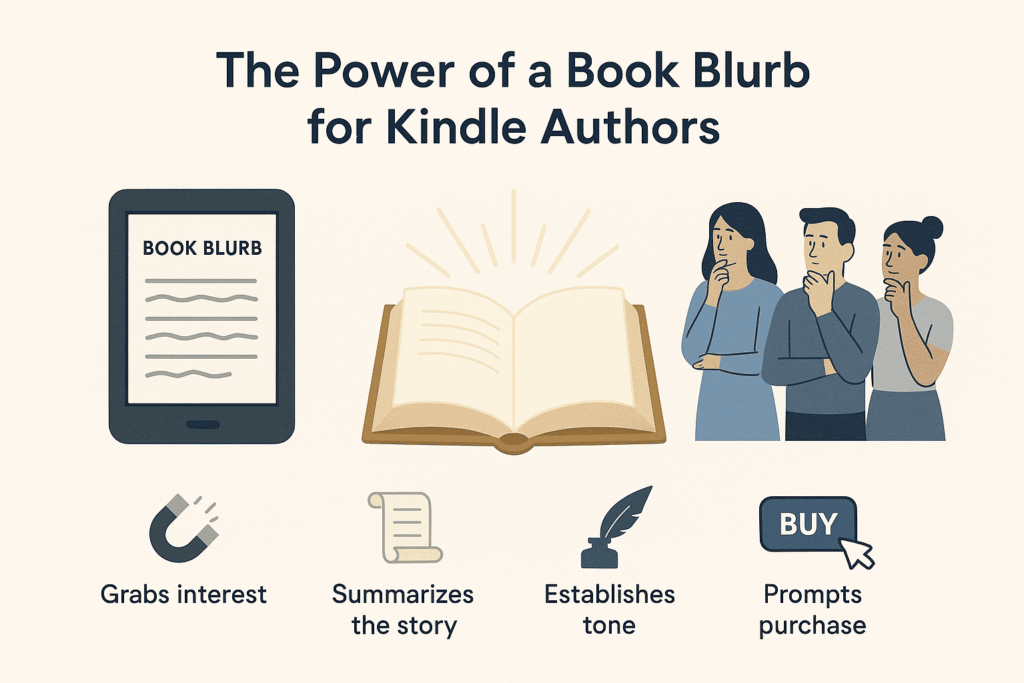
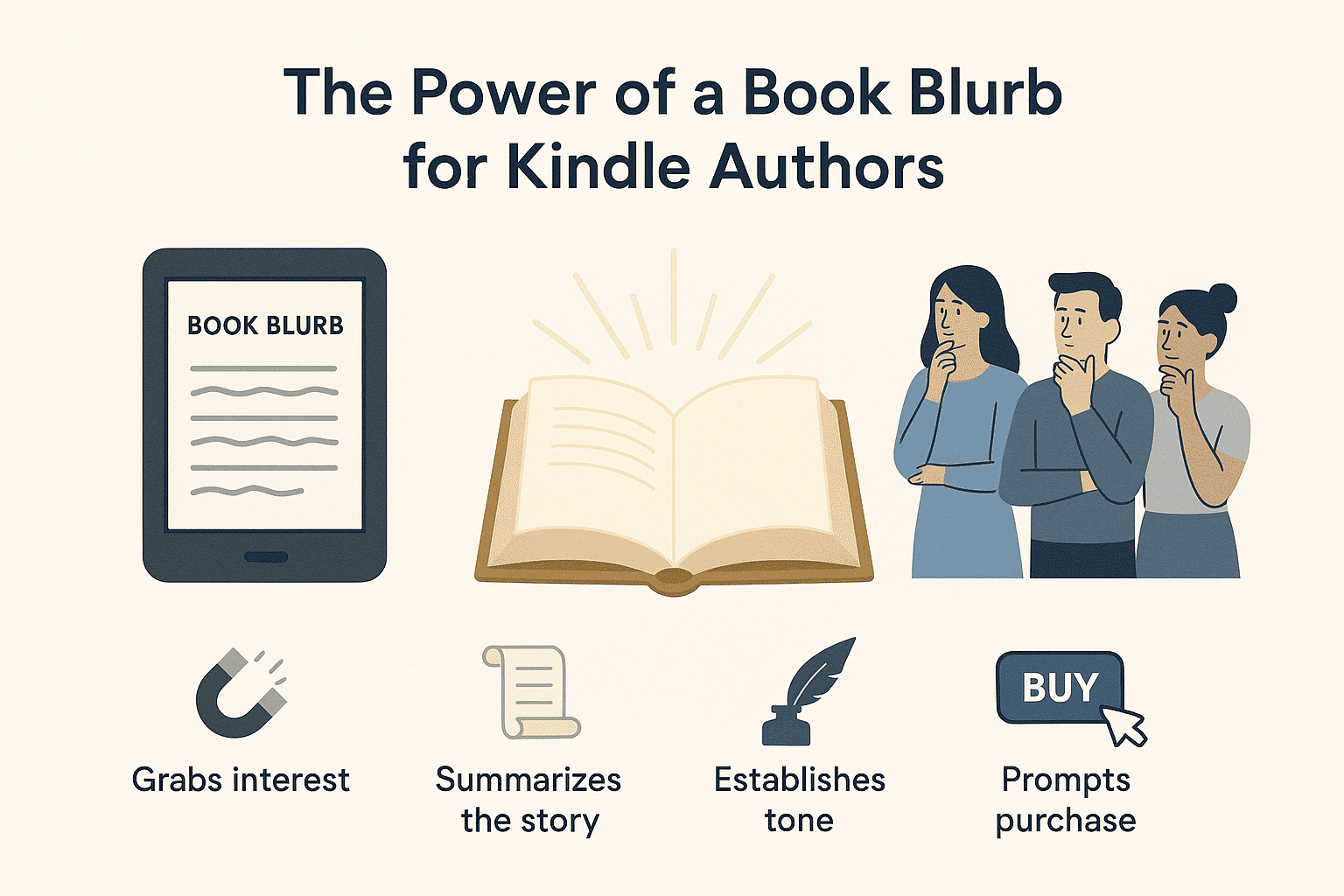
Crafting a book blurb that captivates readers and drives sales is both an art and a science for self-published authors. An effective blurb does more than summarize your story; it entices your target audience, sets expectations, and compels them to click “buy.” Whether you’re launching your first ebook or optimizing an existing Kindle title, mastering the art of the blurb can make a significant difference in your publishing success and royalty earnings.
Understanding the Purpose of a Book Blurb for Kindle Authors
Every Kindle author faces a significant challenge: turning browsers into buyers with just a few, carefully crafted sentences. The book description, or more precisely, the book blurb, functions as your silent salesperson on Amazon’s platform. A compelling blurb bridges the gap between your story and your audience, inviting readers to take that decisive step: clicking “buy.” Understanding the nuances of writing blurbs is essential not just for catching attention, but for converting interest into actual royalties. Whether you’re enrolled in KDP Select, leveraging Kindle Unlimited, or venturing into Kindle Direct Publishing for the first time, mastering how to write a blurb is one of the smartest moves a self-publisher can make for long-term success.
How BookBeam Supports Self-Publishers in Writing Effective Book Descriptions
Success for Kindle authors doesn’t start and end with a well-written book, it hinges just as much on what happens after you hit publish. The book blurb, that compact description perched below your book’s title, stands at the frontline of your sales strategy. It distills your story’s appeal into a carefully chosen set of words, designed for both Amazon’s algorithms and real-world readers. This is where BookBeam becomes a true ally in your publishing journey, merging powerful data insights with practical guidance for writing blurbs that actually work.
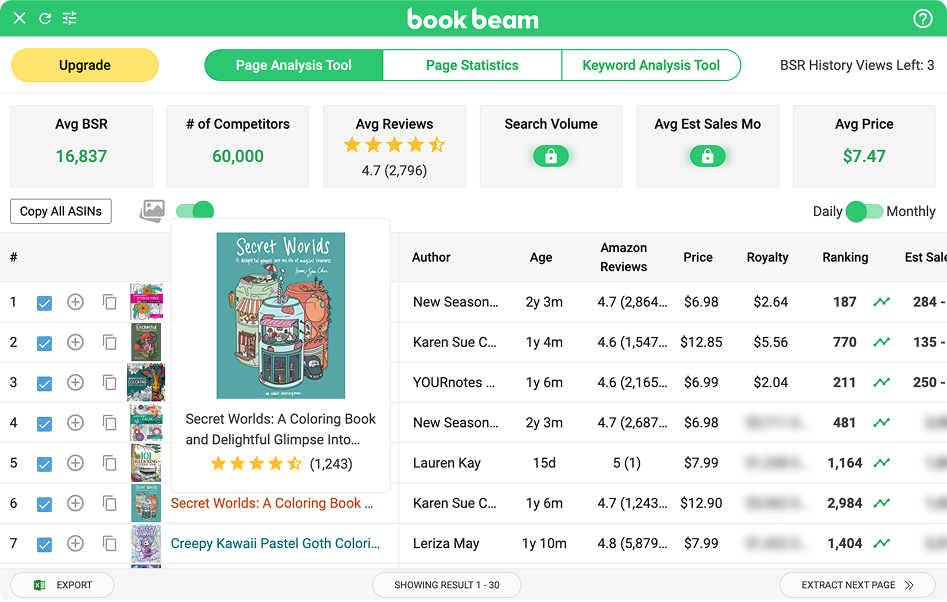
BookBeam gives Kindle authors comprehensive data on what drives conversions in the Kindle Store, including top-performing book blurbs across your genre. Its toolkit collects and analyzes thousands of book description blurbs, spotlighting phrases, structures, and calls-to-action that correlate with higher sales. By studying what works, and what underperforms, you get actionable clarity, not just guesswork. For instance, BookBeam highlights the syntactic patterns and emotional hooks that appear most often in blurb writing tied to Kindle Unlimited bestsellers, offering evidence-based recommendations rather than vague advice.
As an Amazon KDP earning analyst, I’ve seen firsthand how even minor tweaks in a book blurb can dramatically shift a book’s ranking and page reads. The platform’s optimization tools allow you to test A/B variations of your description blurbs, so you’re not left hoping your words are persuasive, they’re battle-tested against what’s already converting readers. Authors using KDP Select, for example, can leverage BookBeam’s genre-specific blurb research to identify power words and narrative approaches that inspire more readers to begin a Kindle Unlimited borrow or purchase outright.
Of course, writing blurbs isn’t just about stuffing in keywords. BookBeam helps you develop a seamless blend of organic storytelling and SEO best practices. The platform guides you in embedding your targeted keywords, like “how to write a blurb,” “book blurb,” “blurb writing,” or “book description”, without sounding forced or robotic. The result is a book blurb that satisfies Amazon’s algorithms while deeply resonating with your target audience. These subtle touches make the difference between stalling at page two in search results and earning coveted page-one visibility.
For self-publishers who want to maximize Kindle Direct Publishing earnings, BookBeam does more than analyze data: it teaches you how to interpret those insights in the context of your current or upcoming titles. By comparing your own draft against the top-ranking competitors in your subgenre, you can pinpoint missing elements or overused clichés in your blurb writing. This not only raises reader curiosity but also ensures your book description occupies a stronger SEO position within Amazon’s search ecosystem.
Perhaps most critically, BookBeam’s ongoing trend monitoring keeps you agile. Market trends shift quickly, especially with new subgenres and reader expectations on Kindle Unlimited. Tools like BookBeam help you adapt, updating your blurb language to reflect current reader desires, and responding to changes before sales dip. With everything from keyword performance tracking to real-time competitor blurb analysis, you’re empowered to fine-tune and future-proof your book descriptions long after your book is first released.
For authors serious about growing their royalties with KDP and Kindle Unlimited, investing time in writing blurbs, supported by BookBeam’s analytics, yields measurable results. A well-optimized book blurb doesn’t just elevate your listing; it amplifies your marketing ROI, turning browsers into loyal fans and boosting your long-term publishing income. Ready to outperform your competition? Rely on BookBeam to transform your book description strategy into a repeatable success formula, because in self-publishing, a powerful blurb is both your front line and your secret weapon.
The Art of a Compelling Book Blurb: Elements That Convert Browsers into Buyers
Crafting a compelling book blurb is more than a creative exercise, it’s your primary sales pitch to readers sifting through countless titles in the Kindle Store or searching within Kindle Unlimited. A great blurb grabs interest, stirs curiosity, and makes clicking “buy” or “read” feel irresistible. The best blurbs blend emotional resonance, persuasive structure, and precise word choice, with each element working seamlessly together to boost visibility and drive conversions. Successful authors understand that the artistry of blurb writing directly impacts their royalties and visibility. Let’s discuss the characteristics that set high-converting blurbs apart and how you can refine your own book descriptions for maximum impact.
Key Characteristics of High-Converting Blurbs on Kindle Unlimited
For authors aiming to thrive on Amazon’s platform, particularly those enrolled in KDP Select and seeking page reads through Kindle Unlimited, understanding the anatomy of compelling blurbs is a strategic necessity. From my perspective as an Amazon KDP earning analyst, it’s clear that the difference between an ordinary blurb and a high-performing one often boils down to a set of identifiable, actionable characteristics. Let’s break down what consistently appears in those blurbs driving the most reads, sales, and engagement.
First, blurb length plays a significant role. Too short, and you risk underselling your story’s hook; too long, and readers may lose interest. Data shows that the most compelling book blurbs typically range from 120 to 170 words, enough space to provide context, develop intrigue, and establish a connection without overwhelming the browser. BookBeam’s analytics confirm that blurbs exceeding 200 words tend to see reduced engagement rates, possibly because readers want immediate clarity and impact. By focusing on a blurb length within this sweet spot, you’ll address both reader impatience and the technical demands of Amazon’s display interface.
Next, the structure of compelling blurbs is vital. High-converting descriptions follow a pattern that quickly delivers stakes and curiosity within the opening sentences. This doesn’t mean resorting to formulaic or generic setups, but rather ensuring that each blurb opens with a clear, specific hook tailored to the genre’s expectations. For instance, blurbs for psychological thrillers on Kindle Unlimited often lead with a single, provocative question or conflict, while romance titles might immediately establish emotional tension between lead characters. BookBeam allows you to analyze top-performing blurb structures by genre, helping you identify narrative elements that readers respond to most, then adapt these findings to suit your book’s unique premise.
Language choice is another subtle but powerful driver of conversion. The most compelling book blurbs use emotive language and strong verbs to show urgency, promise conflict, or spark curiosity. Passive phrasing (“the story is about”) tends to underperform, while active and sensory language (“he must escape before time runs out”) draws readers in. Incorporating genre-appropriate buzzwords, tested via BookBeam’s keyword optimization tools, also increases your book’s discoverability. This means balancing phrases that naturally fit your story with search terms readers use, all while maintaining genuine, human tone.
Audience alignment is especially crucial for Kindle Unlimited titles. Readers scanning KU listings often have established preferences, they want clear indications of genre, tone, and tropes from the blurb itself. Successful blurbs directly signal these cues, whether it’s by hinting at an enemies-to-lovers romance or a time-travel plot twist. Generic or vague blurbs underperform because they fail to meet these audience expectations, resulting in lost borrows or sales. By leveraging BookBeam’s competitor blurb analysis, you can identify what specific elements (e.g., a bolded trope, unique plot premise) are spurring page reads in your subgenre and ensure your blurb addresses those desires directly.
Call-to-action phrasing and closing lines also contribute to a high-converting blurb. While it’s not about overt selling, an effective conclusion invites the reader to take action, whether that’s finding out what happens next, uncovering a buried secret, or falling in love alongside the protagonist. Strong endings rarely echo what’s already been stated. Instead, they add an extra nudge, often phrased as rhetorical questions or cliffhanger statements that linger in the reader’s mind.
Lastly, readability and formatting can’t be ignored. Successful blurbs present information in digestible chunks, using short paragraphs and selective bolding (where allowed by Amazon’s formatting). Breaking up the blurb visually ensures mobile and desktop readers alike can easily scan your description, increasing the likelihood they’ll pause, process the pitch, and convert.
By integrating these characteristics into your blurb writing process and utilizing tools like BookBeam for analytics and A/B testing, you create descriptions that consistently outperform the average. Each compelling blurb becomes not only a gateway to your story, but also a well-calibrated tool for increasing your rank and royalties within the Kindle ecosystem. Ready to take your book blurb from “just another description” to a conversion powerhouse? Optimize every line, monitor trends, and always write with your intended Kindle Unlimited audience in mind.
Crafting an Opening Line That Captures Attention
The initial sentence of your book blurb is your one opportunity to grab a reader’s attention as they scroll through countless titles on Amazon or browse Kindle Unlimited. A great opening line immediately sets the tone, signals genre, and draws readers in before they have a chance to click away. Its purpose isn’t just about style, it’s also about functionality: getting the shopper to read further, converting casual browsers into potential buyers. Mastering those first few words within your blurb is a proven way to increase engagement, drive sales, and maximize your book’s earning potential.
Pitfalls to Avoid When Creating the First Sentence of Your Blurb
Crafting a powerful opening line for your book blurb should feel strategic, not simply creative. From analyzing thousands of high-performing Amazon listings as a BookBeam specialist, it’s clear that the right introduction can set the stage for a soaring conversion rate, while the wrong one can see reader attention vanish almost instantly. There are several traps that both new and seasoned Kindle Direct Publishing authors fall into, making their blurbs less effective and ultimately hurting their royalty prospects.
First and most common is the temptation to start a blurb with vague, generic language. Phrases like “In a world where…” or “This story is about…” often feature heavily in underperforming listings. They might seem serviceable, but they lack specificity and fail to spark curiosity. Readers searching through Kindle Unlimited or other Amazon categories are inundated with these kinds of uninspired intros, which do little to differentiate your book. BookBeam’s analytics reveal that even minor tweaks, switching from abstract statements to vivid, direct hooks, result in a measurable uptick in click-throughs and reads.
Another pitfall involves overloading the opening line with too much backstory or exposition. An effective blurb doesn’t overwhelm. Instead, it hints, teases, and leaves room for curiosity. When the first sentence is dense or crammed with unnecessary character names, world-building, or context, it’s easy for potential readers to feel lost, or worse, bored. This is especially relevant in genres like fantasy or historical fiction, where the urge to “set the scene” competes with the need to captivate quickly. Lean, impactful opening lines, those that cut straight to the main conflict or motivation, regularly outperform their wordier counterparts in BookBeam’s sales dashboards.
Another frequent mistake is a lack of genre clarity from the outset. Your book blurb’s opening must immediately communicate whether readers are about to experience romance, suspense, comedy, or another genre. When the tone or language mismatches genre expectations, readers may feel misled and click away. For example, starting a thriller’s blurb with lyrical or humorous prose can create confusion, even if the writing is strong. Top-performing opening lines almost always “code” their genre in the first few words, setting up the right expectations and capturing the browsing reader’s preferred style.
Relying on passive, exposition-heavy sentences also weakens the blurb’s pull. Sentences that begin with “There is…” or “The story follows…” fall flat; they miss an opportunity to immerse potential readers in action or emotion. It’s far more effective to open with a pointed question, an urgent statement, or a strong piece of dialogue that puts readers right at the narrative’s edge. BookBeam’s insights confirm that active, immediate language draws more page reads, especially for books enrolled in KDP Select, where conversion rates for Kindle Unlimited borrows are so critical to author earnings.
Many authors worry about “giving away too much” in their opening line, and so settle for bland teasers. But in trying to preserve mystery, they inadvertently undermine their own pitch. A strong blurb signals what’s at stake and who is involved, without spelling out the resolution. Ambiguity or withholding too much information in your opening makes readers work harder to understand the appeal, and most won’t bother. According to BookBeam, the highest-earning Kindle authors aren’t afraid to lead with what makes their stories unique, even if that means putting a bold detail up front.
Formatting issues can play a surprisingly large role in performance. Dense opening lines or unnecessarily long first sentences discourage mobile browsing, where most Kindle Unlimited users shop. Short, punchy sentences that are easy to digest keep readers on the page longer, boosting the chance that they’ll keep reading the blurb, and ultimately, decide to buy or borrow. BookBeam recommends reviewing not just your language, but also the visual impact of your first line, to maximize readability on all devices.
One often-overlooked mistake is copying trendy phrasing or clichés seen in other blurbs. While it’s useful to analyze what top-sellers do (and BookBeam’s tools help you identify those patterns), directly echoing another book’s blurb drains your opening of energy and originality. Readers notice repetition, and Amazon’s algorithm may not reward copycat content. Instead, your opening line should be data-informed but unique, blending the findings of analytics with your book’s authentic voice.
Successful authors on Kindle Direct Publishing, especially those optimizing for KDP Select and Kindle Unlimited, treat the opening line of their blurbs as a result of insight-driven experimentation. A/B testing your opening with BookBeam’s blurb optimization tools is a game-changer. You can monitor which phrasing yields the greatest engagement, whether it’s an explosive question, a provocative statement, or a character-driven hook, and continually refine for better sales.
In summary, avoid generic, passive, cluttered, or misaligned first sentences in your book blurb. Let data from platforms like BookBeam guide you, but always prioritize clarity, genre-fit, and emotional impact. Your book’s opening line isn’t just the start of a blurb, it’s your first pitch to every potential reader. Make it resonate, and the rest of your blurb will already be ahead of the pack.
Structuring Your Blurb: Balancing Plot, Stakes, and Reader Curiosity
Getting the structure of your book blurb right can be the difference between grabbing a reader’s attention and fading into the crowded depths of the Kindle Store. A well-crafted blurb blends just enough detail about the story’s plot, hints at the stakes, and stirs the right amount of curiosity, all while fitting seamlessly into Amazon’s technical framework. The challenge for every KDP author, whether leveraging Kindle Unlimited or going wide, is to organize the blurb so readers are hooked instantly and understand why your story matters. Let’s break down how to approach each core structural component, using actionable strategies that drive real results for self-publishers seeking KDP Select or Kindle Unlimited visibility.
Actionable Checklist for Organizing a Blurb with KDP Success in Mind
Structuring a book blurb that converts browsers into buyers or Kindle Unlimited readers is both an art and a science. From an Amazon KDP earning analyst’s viewpoint, the most effective blurbs don’t just summarize your story, they create a progression of emotional engagement. Here’s a step-by-step checklist to help authors establish that structure, informed by proven insights and BookBeam’s blurb analytics.
- Open with a Compelling Hook
Begin your book blurb with a statement or question that immediately signals genre, tone, and the unique pulse of your narrative. Avoid broad introductions; instead, put your protagonist, conflict, or a bold scenario front and center. A successful blurb’s opening isn’t just a teaser, it’s a promise that draws in your ideal reader from page one, helping you stand out on both Kindle Unlimited and traditional KDP sales channels. - Provide Essential Plot Context, But Keep It Tight
After the hook, deliver only the most relevant plot points. Readers scanning blurbs aren’t looking for a synopsis; they want a taste of what makes your book different. Limit exposition and focus on what instantly elevates your blurb: a snapshot of the character’s main challenge or dilemma, a glimmer of the world you’ve built, and a sense of what’s at stake. As BookBeam’s data suggests, the best-performing book blurbs strike a balance, giving enough to intrigue, but never overwhelming. - Showcase the Stakes Clearly
Don’t shy away from stating what the protagonist stands to gain or lose. A flat blurb often fails because readers don’t see why they should care. Whether it’s a matter of life and death, lost love, or a world on the brink, the stakes should be present and concrete in your book blurb. Frame them so readers feel the urgency, compelling them to keep reading or click “Read with Kindle Unlimited.” - Generate Reader Curiosity, Leave Some Questions Unanswered
While showing your hand regarding stakes and conflict helps build interest, resist the urge to reveal every twist or secret solution. The highest-ROI blurbs, as uncovered by BookBeam’s trend monitoring, pose implicit or explicit questions. They hint at obstacles, allude to hidden motivations, or craft scenarios where the outcome feels unpredictable. This curiosity gap primes readers to want more, making the purchase or borrow decision almost automatic. - Integrate Genre Cues and Buyer Signals
For authors targeting Kindle Unlimited or specific Amazon categories, it’s vital your book blurb references clear genre conventions. Use specific tropes, character archetypes, or buzzwords that loyal readers seek out, without devolving into cliché. BookBeam’s analysis shows blurbs that “code” their genre accurately outperform vague, generalized ones, especially in romance, thriller, and fantasy categories. - End with a Subtle, Irresistible Call to Action
Don’t close your blurb with a flat statement. Even if you avoid direct sales language, use a rhetorical question, a tantalizing sentence, or a cliffhanger to nudge readers to act, this is especially potent for Kindle Unlimited browsers who make snap decisions. A strong finish in your blurb leaves the reader with one thought: “I have to find out what happens next,” converting curiosity into tangible royalties. - Optimize for Readability and Mobile User
Break your book blurb into short paragraphs with natural white space, making it easier for mobile and desktop users to scan. Bulky, unformatted blurbs often see reduced conversion rates. BookBeam users benefit from tools that preview how descriptions render across devices, ensuring every blurb is as readable as it is persuasive. - Match Blurb Length and Keyword Use to Amazon’s Best Practices
Optimal blurbs typically range from 120 to 170 words, encompassing just enough plot, stakes, and intrigue without getting bogged down. Seamlessly incorporate your primary search keywords, such as “blurb,” “book blurb,” and variations thereof, by embedding them in ways that don’t disrupt the flow. This natural integration improves visibility while keeping your reader’s experience front and center. Avoid keyword stuffing, as Amazon’s algorithm and savvy readers can spot unnatural repetition instantly. - Test and Refine Using Analytics
Finally, treat your book blurb as a living piece of marketing. BookBeam’s A/B testing feature allows you to pit different versions against each other, tracking which structure leads to higher Kindle Unlimited borrows or direct sales. Pay close attention to which iterations strengthen curiosity, clarify stakes, or streamline plot presentation, these refinements compound your earning potential on KDP.
In summary, approaching your blurb with this checklist ensures no component is overlooked, from that crucial first sentence to the final call to action. Leveraging BookBeam’s analytics, self-publishers can take the mystery out of blurb writing, maximizing both discoverability and sales conversion. Thoughtfully structuring your blurb isn’t just about following a formula; it’s about understanding how readers engage with book descriptions on Amazon and translating that knowledge into lasting royalties. Ready to see measurable results? Apply these steps with every new book blurb, and let data-driven insights inform your creative choices throughout your KDP journey.
Optimizing Your Blurb with Data: Leveraging BookBeam’s Analytics Tools
Once you understand the importance of a well-structured and reader-focused book blurb, the next phase is all about turning your intuition into actionable, data-backed decisions. This is where BookBeam’s analytics suite becomes indispensable for Kindle authors intent on maximizing sales and Kindle Unlimited page reads. By tapping into analytics-driven insights, you gain a clear picture of blurb performance, reader behavior, and shifting market demands. Armed with this knowledge, you can continually refine your book blurb to maintain its edge in the fiercely competitive Amazon Kindle marketplace. Let’s examine how leveraging market data with BookBeam tools lets you refine your descriptions beyond guesswork, aligning your blurb with proven sales strategies for genuine impact.
Using Market Insights to Refine Your Description for Maximum Sales Potential
In today’s data-driven publishing landscape, successful authors recognize that every book blurb is both a creative pitch and an evolving marketing asset. To optimize for ongoing sales, especially within KDP Select and Kindle Unlimited, there’s immense value in grounding your blurb revisions in robust, real-time analytics. BookBeam stands out by transforming raw marketplace data into practical strategies, letting you craft a book blurb that’s calibrated for both visibility and conversion, not just creative expression.
A major advantage BookBeam brings to the self-publisher’s toolkit is real-time market trend analysis. The platform continuously scours Amazon’s bestseller lists, extracting which phrasing, themes, and structural patterns in recent blurbs are correlating with sales surges and spikes in Kindle Unlimited borrows. For instance, you might discover that a certain type of rhetorical question at the end of a book blurb is trending in your genre, or that specific emotional hooks are generating higher click-through rates. By mirroring these effective approaches, not through imitation, but through strategic adaptation, you infuse your own book blurb with selling power proven to work for similar titles.
But market insights go beyond copying what’s hot. With BookBeam, you can benchmark your blurb directly against the top performers in your niche. This benchmarking process exposes gaps or excesses in your current description. If your book blurb is missing market-relevant keywords, skipping crucial genre signals, or relying on tired phrases, BookBeam flags these issues and recommends actionable changes. That means you’re never shooting in the dark; your revisions are always informed by what’s actively converting real browsers into buyers within your specific Amazon category.
The practical use of BookBeam’s analytics becomes especially powerful during A/B testing phases, a recommended step for all serious Kindle Direct Publishing authors. Here’s how it works: You upload two variations of your blurb, perhaps one with a soft emotional approach and another with a sharper focus on stakes or conflict. BookBeam then tracks engagement, borrow rates, and sales associated with each version. Simply put, you can see in real time which blurb moves readers to act, boosting your royalties with hard evidence, not hunches. Over time, this iterative optimization compounds, meaning each new blurb gets smarter and more effective based on what recent data uncovers.
For authors enrolled in KDP Select or targeting Kindle Unlimited audiences, BookBeam highlights a particularly valuable metric: the blurb-to-borrow conversion rate. This measures how effectively your book blurb motivates KU subscribers to welcome your book into their digital library. Authors that routinely tweak their blurbs in line with this feedback often report marked increases in Lending Library borrows and overall KDP earnings. Since Kindle Unlimited readers often make snap decisions based on the book blurb alone, aligning with BookBeam’s up-to-date blurb analytics can put you several steps ahead of authors still relying on intuition or static advice.
Another area where market insight pays dividends is competitive positioning. By using BookBeam’s competitor analysis, you’re able to spot when a rival’s book blurb starts outperforming yours, maybe because they’ve adopted new genre tropes or tidied up their formatting for mobile readers. This real-time awareness allows for nimble, timely adjustments to your own description, capturing reader attention just as new micro-trends emerge. For example, if your genre shifts toward more suspenseful or question-driven blurbs, rapid adaptation through analytics keeps your book blurb market-relevant and prevents sales from slipping.
Strategically integrating BookBeam’s keyword analysis is another edge. The tool suggests natural, high-value placements for repeat keywords like “blurb” and “book blurb,” bolstering your book’s visibility in Amazon’s algorithm without resorting to forced or distracting repetition. This keyword data is shaped by live search queries and sales correlations, meaning your blurb remains discoverable and readable at the same time.
Finally, the feedback loop enabled by BookBeam’s detailed analytics means you’re always in touch with evolving reader expectations. Maybe shorter blurbs are in vogue, or readers are drawn to blurbs with a more conversational tone. By tracking these shifts with BookBeam, your book blurb never grows stale. Instead, you’re capitalizing on each data-backed refinement to secure stronger launches, sustain sales momentum, and capture greater Kindle Unlimited engagement.
Whether you’re a first-time author or seasoned KDP Select publisher, BookBeam lets you shift from reactive to proactive book blurb optimization. With a blend of market trend analysis, competitor benchmarking, targeted A/B testing, and keyword refinement, you gain all the insights necessary for continual growth in the Amazon marketplace. Don’t settle for static blurbs and hope for the best, make every word count by letting BookBeam’s analytics guide your next blockbuster description. Ready to maximize your royalties? Harness data-powered blurb writing and see your books outperform the competition, one optimized blurb at a time.
Crafting a compelling blurb is your opportunity to captivate readers and spark their curiosity. With clear messaging, a focus on intrigue, and strategic highlights of your book’s strongest elements, you’re setting the stage for higher conversions and steady sales. Let BookBeam help you put proven strategies into action. Try our tools to optimize your blurb and see how small changes can yield maximum results. Ready to take your book to new heights? Start optimizing with BookBeam today and reach a wider audience on Amazon KDP