Finding the ideal word count per chapter can be a challenge for self-published authors, especially on Kindle Direct Publishing. Understanding average chapter lengths and how to structure chapters effectively can improve pacing, reader engagement, and overall story flow. Whether you’re writing your first book or optimizing your current manuscript, practical advice on chapter length can make a significant difference in your publishing success. Discover industry averages, helpful structuring tips, and actionable strategies to make each chapter work harder for both you and your readers.
Understanding the Average Word Count in a Book Chapter
Determining how many words long a chapter should be is a question that comes up frequently for self-publishers. The average word count in a book chapter varies based on factors like genre, author preference, and intended reading experience. Knowing the typical length chapter can help streamline your manuscript planning and structure, especially when aiming for consistency and enhanced reader engagement. Understanding chapters average in word count isn’t just about meeting a words standard but achieving the right pacing and flow for your book. For authors using Kindle Direct Publishing, tailoring your chapter word counts to audience expectations plays a significant role in maximizing your book’s impact and sales prospects.
Factors That Influence Chapter Length and Structure
Several elements drive the chapter word count in books, and understanding these can help authors create chapters that resonate with readers and drive higher engagement, especially in the world of Amazon KDP publishing. To begin with, the genre of your book plays a big part in shaping both the average word and the standard chapter structure. For instance, thriller novels often feature shorter chapters, sometimes under 1,500 words long, to create tension and a brisk pace. In contrast, literary fiction or epic fantasy can contain chapters that exceed 5,000 words, offering expansive storytelling and deeper immersion. When reviewing chapters average in your manuscript, referencing successful titles within your chosen category on Kindle Direct Publishing can guide expectations and set a reliable benchmark for your own book chapter planning.
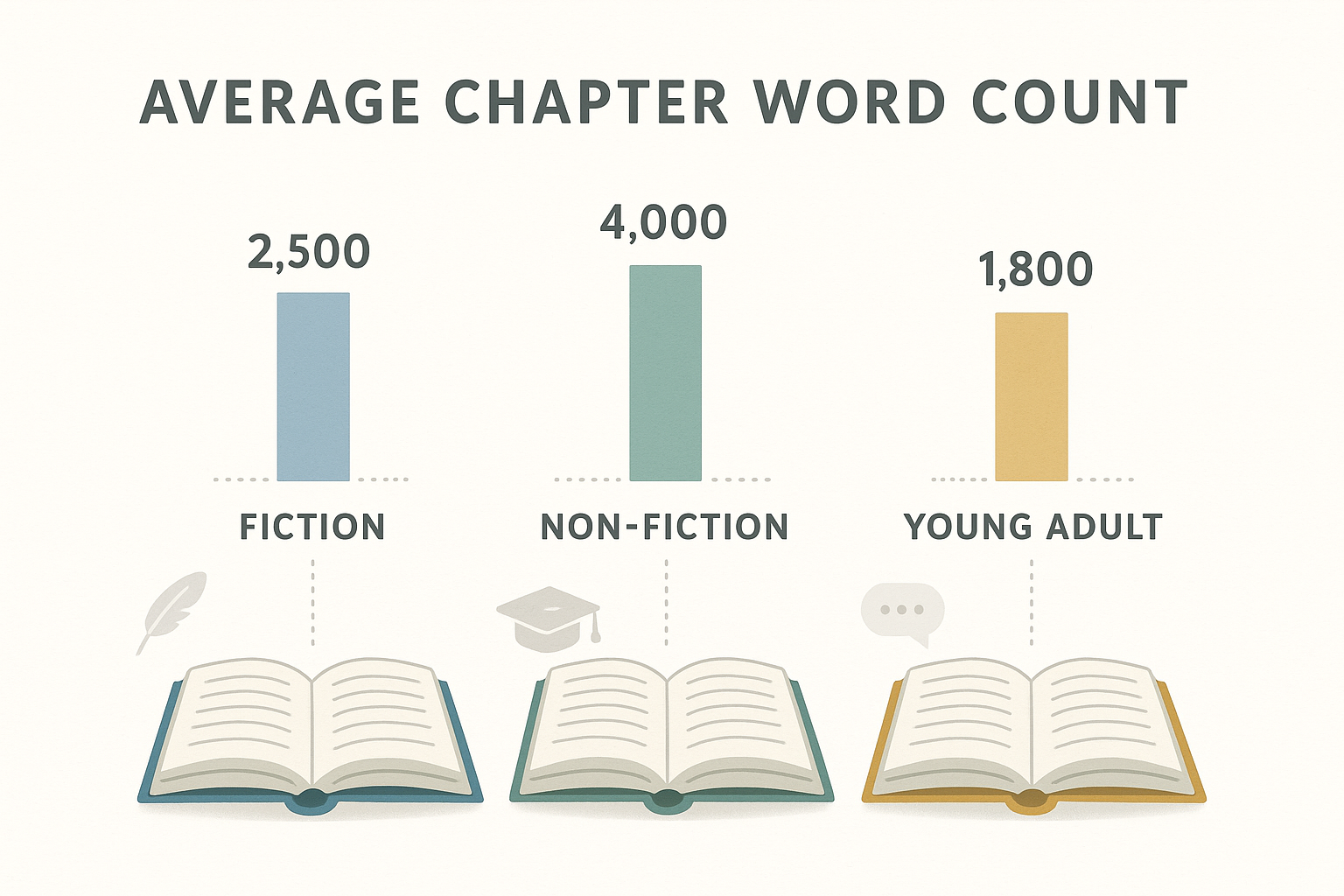
Another significant factor is your audience’s reading preferences. Readers of middle grade or young adult fiction tend to favor concise chapters, making 1,200 to 2,000 words long per chapter a practical standard. This not only matches the attention span of younger readers but also encourages a sense of accomplishment and momentum. Conversely, adult nonfiction readers may expect longer, more information-dense chapters, sometimes pushing the chapter count lower as each chapter holds greater content depth. Analyzing the chapter structure in bestselling books aligned with your target audience ensures your length chapter is well-suited to their preferences, increasing readability and satisfaction.
Pacing is another element that impacts how words are distributed across chapters. Shorter chapters contribute to a faster rhythm, keeping readers turning pages, a tactic highly effective on digital platforms like Kindle Unlimited, where reader retention influences your earnings. Additionally, frequent chapter breaks can offer natural stopping points, accommodating busy lifestyles and reinforcing a positive reading habit. Deciding on chapter breaks and length helps strike a balance between delivering valuable content and maintaining a compelling pace throughout your book, further shaping your chapters average and maximizing engagement.
For authors focused on Kindle Direct Publishing and KDP Select, the backend analytics provide insights into reader progress, drop-off points, and page consumption. These metrics can guide future adjustments to your average word count, as you see what works for your readers and what doesn’t. BookBeam’s suite of analytics tools gives publishers an edge by highlighting which chapter structures result in increased read-through rates or higher overall performance in Kindle Unlimited. By monitoring not only the words but also chapter count, length chapter, and chapter word trends, you can optimize your words long per chapter to fit your unique audience and boost royalty performance.
Content, tone, and story arc also contribute significantly to deciding chapter length. Sometimes, breaking a chapter where a natural shift in the plot occurs keeps readers engaged and creates stronger hooks at chapter ends. On the other hand, some stories require longer chapters to fully establish a context, introduce important elements, or finish a scene without interruption. Effective chapter planning means weighing these story-centered elements against data-driven best practices, thereby using both instinct and intelligence to get your balance right. Utilizing tools like BookBeam, you can compare your manuscript’s chapter count and chapter structure against market leaders, helping you tailor your work for optimal effect.
Finally, manuscript length goals dictate how chapters fit into the bigger picture. Setting a target total word count for your book will naturally influence chapters average by dividing that number by your intended chapter count. This formulaic approach supports strategic planning, especially when aiming to publish multiple titles or managing tight writing deadlines. Keeping a consistent structure and predictable word count per chapter not only streamlines the editing process but also aligns your book with the expectations of Kindle and KDP readers, reinforcing the professional quality synonymous with successful self-publishers.
Genre Differences: Comparing Chapter Lengths Across Fiction and Nonfiction
The type of book you’re writing often shapes the words you’ll include in each chapter and how those chapters are structured. Fiction and nonfiction genres guide both the average word count and the overall chapter structure, affecting how readers experience the story or information you’re presenting. Analyzing trends in chapter word length across different genres can help you make data-informed decisions, set realistic expectations for your manuscript, and address what readers in your niche actually want. As you refine your book chapter approach for KDP, understanding genre patterns ensures that chapter count and chapter breaks aren’t just arbitrary, they align with market-tested standards for reader satisfaction and engagement.
Effective Approaches to Chapter Planning for KDP Authors
KDP authors aiming to make their mark on Kindle Direct Publishing platforms need strategies that balance creative storytelling with practical market realities. One of the first steps is to truly analyze the chapters average in your chosen genre. Fiction categories, such as thrillers, romance, or literary fiction, vary dramatically in their chapter word preferences. Thrillers frequently use shorter, punchy chapters of around 1,000 to 1,500 words, maximizing suspense and encouraging readers to flip “just one more page.” Literary or fantasy fiction, meanwhile, might see chapters stretching to 3,000 words or well beyond, offering depth and immersion. Understanding these tendencies by referencing the average word count and chapter count in top-selling titles within your field give you a practical benchmark for your own chapters.
Nonfiction is structured differently. Here, readers expect information to be delivered in digestible segments but with enough detail to ensure authority and value. A nonfiction book chapter typically contains more words than many fiction chapters, averaging anywhere from 2,500 to 5,000 words, depending on the depth of the topic. This doesn’t mean all chapters must be lengthy; breaking complex topics into multiple, focused chapters can result in a more approachable chapter structure. For KDP Select and Kindle Unlimited authors, analyzing bestselling nonfiction titles for their chapter word patterns is especially effective, those insights help you align with the chapter breaks and chapter count that boost both reader completion and engagement metrics.
As an Amazon KDP earning analyst, I’ve observed that authors who succeed consistently in Kindle Unlimited pay close attention to chapter word pacing. They leverage regular chapter breaks to maintain momentum and optimize for the platform’s page read model. The data shows that tighter, more consistent chapters average higher completion rates, translating to more royalties and better book performance. BookBeam, as an analytics and research powerhouse, can help you compare your planned words standard and average word chapter against the aggregate data of your competitors. By analyzing what works in your genre, through both chapter length and chapter count, you minimize guesswork and increase the likelihood of repeat readership, a vital goal for anyone seeking sustained KDP sales.
Planning also means considering your audience’s expectations. Younger audiences appreciate short, fast-paced chapters, and children’s or young adult fiction can benefit from lower chapters average and higher frequency of chapter breaks. Adult genres, especially in nonfiction, should balance providing complete information with keeping the text approachable. If each chapter is too dense or too long, readers may lose interest or find it hard to pick up where they left off. Kindle Unlimited data frequently shows that structured, uniform chapters retain reader attention better, partly because readers can easily anticipate how much time or effort each chapter requires.
For self-publishers, the goal is a strategic blend: calculate your intended book length, then split it into chapters that reflect genre norms but also fit your content and pacing goals. Use chapter breaks not just for convenience, but to create hooks, logical pauses, or moments of reflection, this works especially well for digital-first reading habits. By setting word count targets for each book chapter and adjusting as you write, you maintain both creative flexibility and reader-focused structure. Ultimately, using tools like BookBeam to track successful chapters, optimize for words per chapter, and match chapter structure to the KDP marketplace gives you the edge needed to outshine the competition.
Authors publishing on KDP, especially those in KDP Select, should routinely review analytics post-publication. Study where peak drop-offs or spikes in engagement occur within your chapters. If a certain chapter’s word length outpaces the chapters average and leads to reader disengagement, consider tightening the text or splitting it up, flexibility and a data-driven approach can yield significant improvements. Don’t overlook how these insights can inform your next project; keeping a running log of what chapter word patterns led to higher reader satisfaction or increased page reads will build your long-term self-publishing success.
Ready to fine-tune your book’s chapters or optimize chapters average for your next manuscript? BookBeam’s integrated research and analytics can help you choose the right chapter word targets, identify what’s trending in your genre, and ensure every chapter you publish is one step closer to Kindle success. Start planning your book chapter strategy, align your words, chapter count, and structure with both reader habits and market demand for the highest returns on Amazon KDP.
How Chapter Length Affects Reader Engagement and Kindle Unlimited Metrics
Choosing how long each chapter should be is more than just a stylistic preference, it’s a strategic decision that directly impacts how readers interact with your book, especially on digital platforms like Kindle Unlimited. Chapter length, the number of words in a chapter, and the pacing between chapters influence not only the reader’s enjoyment but also the royalty earnings and engagement metrics measured by Amazon KDP. Authors using data and research, such as those found in BookBeam’s toolset, can uncover how chapter word patterns, length, and count drive better retention and higher Kindle Unlimited page reads. Understanding these trends helps you craft a book that resonates with readers and outperforms the competition on KDP.
Data-Driven Insights Using BookBeam’s Self-Publishing Tools
For KDP authors, the length of each chapter isn’t just a matter of preference, it’s a lever for optimizing reader experience and increasing royalty earnings. BookBeam’s research and analytics platform is designed to help self-publishers interpret complex chapter data, understand words per chapter trends, and refine their approach for both print and digital audiences. Drawing from BookBeam’s vast pool of industry data, we consistently see that chapters with a carefully calibrated word count lead to stronger reader engagement, better Kindle Unlimited performance, and more predictable royalty streams.
Chapter length plays a central role when measuring how readers interact with your content, especially if your book is listed in Kindle Unlimited. The platform’s payout model is based on pages read, all tied back to how words standard and chapter word patterns impact reading habits. Longer chapters can sometimes cause a drop in completion rates, as readers hesitate to commit the time required to finish a lengthy section. On the other hand, chapters that are too short might fragment the story or disrupt narrative flow, making it difficult for readers to feel immersed. Synthesizing BookBeam’s data, the sweet spot for words long in a chapter tends to be between 1,500 to 3,000 words for most fiction genres and 2,500 to 5,000 words for nonfiction. These benchmarks help authors decide on consistent, effective length chapter goals while still allowing creative flexibility.
Monitoring chapters average, chapter count, and chapter structure across bestselling books on Kindle reveals a direct correlation between balanced chapter length and sustained read-through rates. BookBeam allows authors to compare their own words per chapter against those of market leaders, identifying where they can refine chapter word count or adjust pacing for maximal reader retention. This is particularly important for KDP Select members, where every additional page read can lead to a tangible increase in earnings. The difference between a chapter that runs a little too long and one that’s optimized for digital reading can mean hundreds of additional KENP (Kindle Edition Normalized Pages) counted, directly impacting your royalty statement.
BookBeam’s analytics feature also helps root out problematic chapters, those that consistently correlate with higher drop-off points or reduced reader engagement. By quantifying where in your manuscript readers are most likely to stop, authors can adjust chapters, tweak length, or experiment with chapter breaks to improve overall book performance. This level of self-publishing insight provides a clear path for continuous improvement, allowing you to iterate your approach as you get real-world data back from KDP’s systems. For example, if you notice that a chapter’s words count far exceeds your chapters average and leads to fewer completed pages, BookBeam provides the actionable feedback you need to split or condense chapters accordingly.
Another area where BookBeam’s data truly shines is comparative genre analysis. Not all markets respond the same way to length chapter or chapter word strategies. While the thriller category may favor brief, punchy chapters to sustain tension and keep pages turning, literary or historical fiction genres routinely see chapters in excess of 3,000 words without negatively impacting engagement. By filtering the platform’s data by genre, KDP authors get a tailored benchmark of words standard for both chapter structure and chapter count, ensuring your approach is market-oriented rather than purely instinctual. This leads to stronger book performance, better reviews, and higher placement within competitive Kindle Unlimited niches.
Practical application of these insights means more than just sticking to a fixed words long target, it’s about fine-tuning your manuscript as you gather analytics both pre- and post-publication. For recurring releases or series, tracking how changes in your book chapter strategy affect words per chapter, chapters average, and chapter word counts can create a compounding effect on your author business. BookBeam’s platform makes it simple to log these changes, measure their effect, and adjust future manuscripts accordingly. This cyclical data-driven methodology keeps your publishing strategy aligned with shifting reader preferences and evolving KDP royalty models.
Ultimately, authors who leverage BookBeam’s real-time analytics and genre research tools set themselves apart. By using actionable, data-backed recommendations to refine how many words go into each chapter, where they insert chapter breaks, and how many chapters to include, self-publishers can maximize both reader engagement and royalty potential. For anyone seeking to not only meet but exceed words standard on Kindle Direct Publishing, understanding and applying precise chapter word and length strategies puts you at a distinct advantage, helping you drive higher sales, better reviews, and a more loyal readership, all while maintaining sustainable, repeatable publishing success.
Tips for Structuring Chapters to Maximize Readership
Structuring your chapters strategically can make a significant difference in how readers interact with your book, directly influencing both engagement and sales, especially for those using Kindle Direct Publishing. The right chapter structure, balanced chapter breaks, and consistent words long per chapter encourage clarity, smooth pacing, and reader retention. We’ll focus on actionable methods for organizing chapters to maintain flow, clarity, and high retention rates, drawing on insights from industry analytics. Investing in intentional chapter planning with effective structure ensures your readers keep turning pages, resulting in greater satisfaction and improved Kindle Unlimited metrics for authors aiming to stand out on Amazon KDP.
Organizing Chapters for Flow, Clarity, and Retention
Crafting a manuscript that hooks readers from start to finish doesn’t rely solely on strong content, it’s the thoughtful organization of chapters, deliberate chapter breaks, and intentional chapter structure that often make the difference in holding attention. Whether you’re a seasoned KDP author or gearing up to publish your first book on Kindle Direct Publishing, one of the most impactful tools at your disposal is optimizing words long and balancing your average word count in every chapter for a smooth, engaging flow.
As an Amazon KDP earning analyst with years specializing in Kindle Unlimited trends, I’ve seen countless instances where careful structuring of chapters leads directly to enhanced reader engagement and royalty gains. The logic behind this is straightforward: readers are more likely to progress through a book that provides clear signals about pacing and content. Chapters of similar length, punctuated with purposeful chapter breaks, let readers anticipate effort and investment, essential on digital reading platforms where session lengths vary and distractions abound.
Start by outlining your book at the macro level. Determine how the story or information should unfold, identifying natural transitions, climaxes, and pacing shifts. Each chapter should serve a defined purpose, and chapter structure should reflect both narrative demands and genre conventions. Data pulled from BookBeam’s analytics suggests that fiction works especially well with chapters averaging between 1,500 to 3,000 words long, giving enough space for development without overwhelming the reader. For nonfiction, you might extend words long in each chapter to cover 2,500 to 5,000, as readers expect more depth, but make sure transitions remain clear.
One of the best ways to maintain flow is using consistent chapter breaks at moments of tension, revelation, or natural pause. Not only do chapter breaks encourage readers to continue (especially when chapters end with a hook or unresolved element), but they also align well with the reading habits tracked on Kindle Unlimited, where each additional page read improves your royalty outcome. Too many short chapters may fragment the narrative, while overly lengthy chapters can discourage readers from starting or finishing a section in a single sitting, ultimately harming your retention statistics.
Clarity within each chapter is just as important as overall structure. Open every chapter with a clear sense of purpose, signaling what’s to come, this aligns particularly well with nonfiction, where readers often scan the start of a section before committing. In fiction, clarity arises from focused scenes and tight pacing; cut any scenes or tangents that don’t serve the main plot or theme. Regular self-editing, aided by BookBeam’s data on chapter word patterns and market standards, can help you refine your chapters average for maximum readability and marketplace success.
Transparency in chapter structure benefits both your workflow and the reader’s journey. For self-publishers using KDP Select, sharing your average chapter length, such as in a table of contents or introduction, can subtly set reader expectations. This small touch improves the perceived value of your book and encourages readers to commit, as they know what to expect in terms of time and effort per chapter.
Retention is at the heart of every structuring decision. Chapters that are too inconsistent in length cause disruption, often leading to drop-off points, all of which can be tracked through BookBeam’s advanced analytics tools. By analyzing successful competitors or reviewing your book’s post-publication chapter performance, you can pinpoint which chapters or chapter breaks are causing churn. This insight lets you revise future manuscripts or even update existing ones to boost retention rates and Kindle Unlimited payouts.
Finally, use chapter headings and subheadings to create further clarity. In nonfiction, descriptive subheadings within longer chapters can break up dense information into easy-to-digest sections, supporting both clarity and flow. For fiction, thematic or numbered headings foster reader orientation, helping keep track of shifting timelines or points of view, another proven way to increase satisfaction and completion rates.
Authors publishing through Kindle Direct Publishing with an eye on Kindle Unlimited success should view chapter structure as both an art and a science. It’s about harnessing analytics to craft chapters that are words long enough to convey the intended content but concise enough to hold attention throughout. With BookBeam offering you the latest in real-time trends and actionable feedback on chapters, mastering chapter structure becomes a repeatable, data-driven process. Use these strategies to build chapters and chapter breaks that work as hard for you as your content does, keeping your readership high, your reviews positive, and your KDP royalties on the rise.
Practical Checklist: Setting Words and Chapters Targets for Your Manuscript
Developing an effective manuscript starts with setting realistic and data-driven targets for both chapter word count and total chapter count. As highlighted in previous sections, understanding the chapters average and genre standards is fundamental to establishing your words standard. Consistency in chapter length supports reader engagement, streamlines editing, and aligns your book with marketplace expectations, factors that directly impact Kindle Direct Publishing performance and Kindle Unlimited royalties. Use analytics from tools like BookBeam to inform your chapter word and chapter structure decisions, reducing the risk of reader drop-off and optimizing your manuscript for digital consumption.
Begin your checklist by clarifying your manuscript’s overall goals. What is your target total word count? Divide this number by a preferred chapters average to calculate your projected chapter count. For instance, if you’re writing a 60,000-word novel and aim for chapters around 2,000 words, plan for approximately 30 chapters. This formulaic approach not only brings clarity to your book’s architecture but also simplifies future editing and structuring. Considering chapter breaks as natural pauses or plot turns, set a target length chapter that accommodates the rhythm of your narrative or argument, rather than forcing uniformity where it might not serve the reader’s experience.
Track your progress using a dedicated spreadsheet or writing app, noting each chapter’s word count as your draft develops. Periodically compare your chapters’ word distribution, look for extremes that deviate from your words standard. Outliers signal opportunities for refinement: either to condense overly long chapters or to combine those that are significantly shorter than your planned average word target. BookBeam’s analytics can provide genre-specific guidance on optimal chapter word length, highlighting if you’re within the expected range for your audience. This not only improves pacing but ensures smoother chapter transitions, a key ingredient to high reader retention on Kindle Unlimited.
Next, establish clear guidelines for chapter breaks that serve both narrative and practical purposes. Use chapter breaks at significant moments, cliffhangers, revelations, thematic shifts, or changes in point of view. In nonfiction, chapter breaks can coincide with major topic changes or section conclusions. For authors targeting the KDP platform, regular and strategic chapter breaks correlate with sustained page reads and better engagement metrics. Monitor your chapters average to ensure consistency, adjusting chapter length as you review manuscript drafts based on reader analytics and BookBeam’s market data.
When reviewing chapter structure, ask yourself if each section offers distinct value and progression, both in terms of content and reader momentum. Outdated advice suggests sticking rigidly to a set words long per chapter, but market data shows that flexibility around a reasonable chapters average produces the best results. Allow your words to serve the intention of the chapter, but use your checklist as a safeguard against excessive deviation that disrupts flow or frustrates readers. Consistency in words standard and structured chapter count simplifies editing and appeals to busy Kindle Unlimited readers seeking predictability in their reading sessions.
Finally, leverage post-publication data. Use BookBeam’s tracking to evaluate which chapters outperformed or underperformed in terms of page reads, engagement, and reader drop-off. If a specific chapter’s word count noticeably impacts metrics, revise accordingly in future releases. Tag each revision by date and reason; this iterative, analytics-based approach strengthens your overall publishing strategy and supports long-term royalty growth on Amazon KDP and within Kindle Unlimited. Remember, successful self-publishers treat chapter planning as both a creative and analytical exercise, carefully balancing average word count, chapter count, chapter word, and effective chapter breaks to build manuscripts that retain readers and maximize sales.
With these practical steps, KDP authors can confidently set and adjust their word count and chapter targets for optimal performance. Ready to bring your next manuscript in line with best practices? BookBeam’s all-in-one platform is your partner in research, analytics, and chapter structure optimization, ensuring you have the actionable data needed to outperform the competition and keep your royalty checks consistently strong.
Finding the right chapter length can make your story more engaging and accessible for readers. By understanding average word counts and applying flexible structuring techniques, you can shape chapters that support your narrative flow and goals. Use data-driven insights from BookBeam to monitor and optimize your chapter strategies for Kindle success. Whether you’re drafting your first book or refining an existing manuscript, remember that well-structured chapters help you reach more readers and improve your publishing outcomes. Start analyzing your manuscript today and unlock new possibilities on Amazon KDP.