
Understanding how long it takes to write a novel can help authors plan their creative journey more effectively. Factors like word count, writing habits, and publishing goals play significant roles in shaping realistic timelines. Whether you’re drafting your first manuscript or optimizing your writing process for faster releases, knowing industry averages allows you to set practical milestones. With the right strategy and insights, you can transform your ideas into a finished book while maintaining quality and meeting your personal or professional targets as a Kindle Direct Publishing author.
Understanding the Relationship Between Word Count and Writing Timelines
Setting realistic expectations for how long it takes to write a novel can be challenging for many KDP authors. The length of your book’s manuscript, typically measured by word count, isn’t just a number on the page, it directly influences both your planning process and the eventual time needed before publication. Shaping your writing schedule around your targeted word count allows for greater predictability in your workflow, helping you balance personal goals with the requirements set forth by Amazon KDP. By examining how different book lengths interact with various writing schedules, authors can make informed decisions about daily outputs, outline strategies, and the types of books best suited for their ambitions. Understanding the synergy between book length and scheduling is essential, especially when publishing books for Kindle Unlimited and KDP Select, ensuring your work meets both creative and commercial objectives along the way.
How Book Length Influences Scheduling for KDP Authors
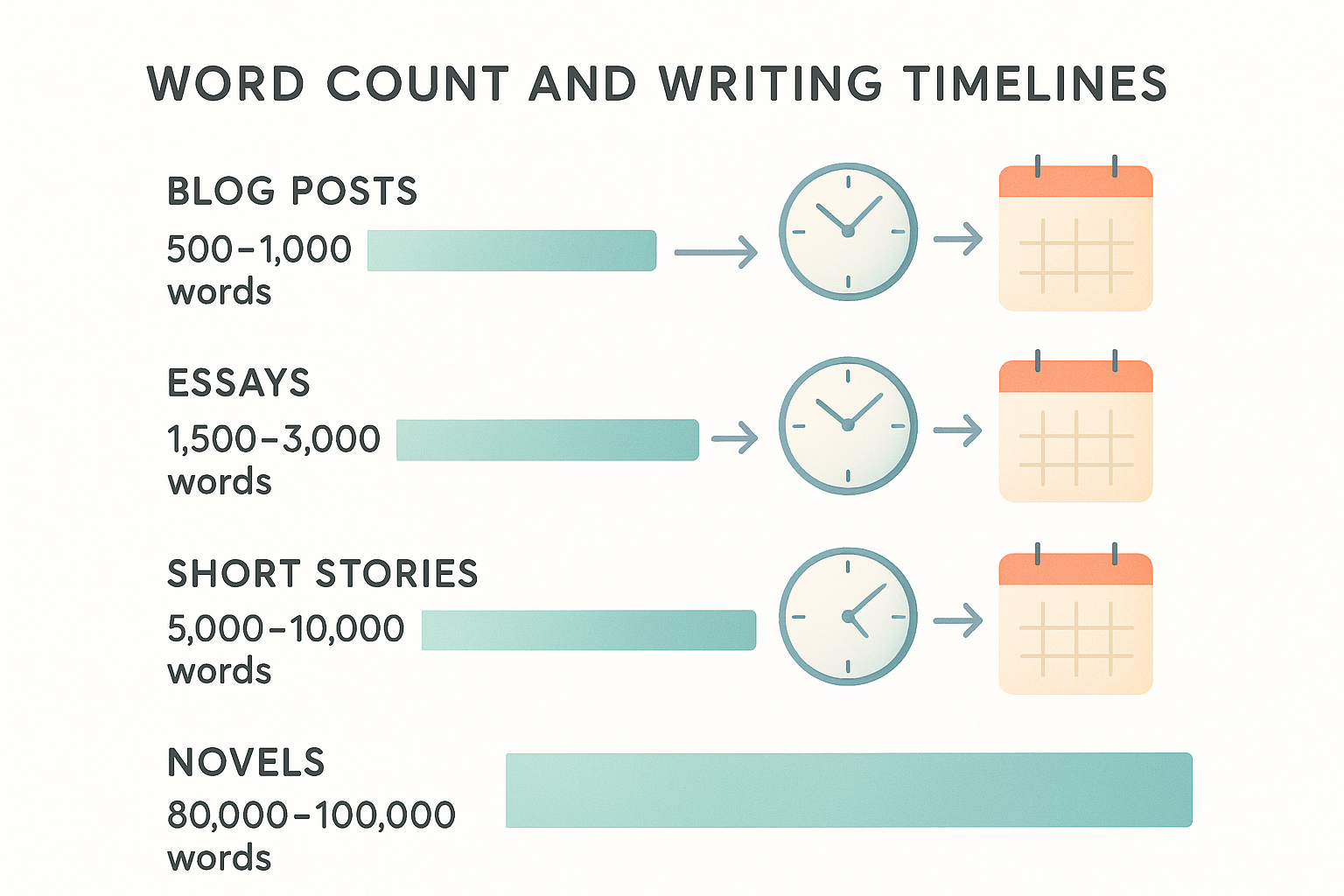
One of the first factors KDP authors should consider when planning a new book is word count, as it significantly impacts how long the writing process will take. Writers aiming for a concise, focused novella of 20,000 words will structure their schedules differently from those tackling an epic novel spanning 100,000 words or more. Word count is more than a technical requirement, it’s a reflection of the story’s complexity, depth, and ultimately, the type of book you intend to deliver to readers. For those navigating the world of self-publishing, especially through programs such as KDP Select and Kindle Unlimited, understanding how word count shapes the writing timeline can directly affect sales, market positioning, and reader expectations.
A shorter book, say 30,000 to 40,000 words, often aligns well with genres like romance or young adult fiction, and can usually be drafted in a matter of weeks if you commit to a consistent writing schedule. Longer books, especially in genres like fantasy or historical fiction, might demand several months of dedicated work due to their higher word count and structural intricacies. KDP authors need to be conscious of this distinction early on, as it informs everything from their daily word output goals to how much time they allocate for outlining and worldbuilding. Understanding these variables helps you avoid overambitious plans that lead to burnout or discouragement.
Establishing an outline before you begin writing is an effective strategy for managing both word count and schedule. A clear outline not only reduces the anxiety around blank pages but also breaks down your big project, your book, into manageable chunks. Outlines also help you estimate the time needed for each stage of writing, since each chapter or section will have a defined word count. For instance, if your book outline calls for ten chapters of approximately 4,000 words each, you know precisely what your milestones are and how they contribute to your ultimate goal. This transparency is valuable not just for your own tracking but also if you’re looking to optimize your workflow for higher royalties or to stay competitive on the Kindle Unlimited platform.
The type of book you plan to write, fiction, nonfiction, reference, or instructional, will further affect your schedule. Nonfiction usually requires more upfront research and planning within the outline phase, while fiction may give you more creative flexibility. In both cases, a realistic expectation of daily or weekly word count is necessary. Many successful KDP authors use tools and data, including analytics platforms like BookBeam, to track their output, ensuring they stay aligned with their targets. When you know how long an average book in your genre tends to be, you can benchmark your own progress and use those numbers to forecast when you’re likely to finish drafting.
Longer books often require more rounds of revisions, development, and editing, steps that extend your timeline far beyond the initial draft stage. While some writers may produce a high word count daily, others find that maintaining this pace , especially on long projects , can affect the quality of the finished book. Striking a balance between speed and accuracy is vital for those aiming to maximize Amazon KDP royalties while maintaining a reputation for quality.
Finally, by aligning your expectations to the word count of your chosen book type and outlining in advance, you foster a disciplined writing routine that’s less prone to disruption. This strategic approach not only streamlines the publication process but also empowers you to launch books to market faster on KDP Select and Kindle Unlimited. By leveraging structured outlines, consistent output, and accurate word count goals, you’re more likely to stay productive, meet your deadlines, and ultimately see lasting results from your self-publishing efforts. BookBeam users in particular find that harnessing this data-driven approach takes much of the guesswork out of planning, making the journey from first word to published book faster, more predictable, and more rewarding.
Writing Speed: What Affects Your Progress on a Novel?
Achieving steady progress on a novel is often less about creative bursts and more about understanding the forces that shape your writing speed each day. Your daily word count, the quality of your output, and your overall timeline are influenced by a mix of personal habits, external demands, and the resources at your disposal. Factors like genre, project complexity, and the expectations of Amazon KDP platforms can shape your routine and impact productivity. Recognizing these variables helps you build a workflow that not only boosts average writing efficiency but also moves you closer to your publication targets with confidence and clarity.
Tools and Data That Help Measure and Improve Your Daily Output
Writers producing books for Kindle Direct Publishing are increasingly mindful of the factors that shape their average writing speed, from the mechanics of setting daily word goals to maximizing the value of every session spent at the keyboard. Leveraging the right tools can be transformative for self-publishers hoping to optimize both output and quality. Several writing software platforms, analytics dashboards, like BookBeam, and productivity applications are now central to a successful KDP author’s toolkit, each designed to track, analyze, and improve your writing habits.
The first step in managing your writing speed is systematically tracking daily word counts. Word processors such as Scrivener or Google Docs allow for easy monitoring, but advanced platforms like BookBeam provide data-driven insights into your ongoing writing trends. By recording each writing session’s word total, authors quickly spot patterns: maybe your average writing output is strong on weekends, or perhaps you notice productivity drops after reaching a certain cumulative word target. Capturing and reviewing this data encourages writers to set practical, realistic goals and recognize when adjustments are needed to meet Amazon KDP publishing timelines.
For authors targeting specific word counts, a necessity for KDP Select and Kindle Unlimited projects, goal-setting apps are indispensable. Tools that automate daily reminders and break your total word count into achievable increments help keep you accountable. If you need to produce a 50,000-word novel in two months, setting a daily writing goal of 834 words ensures steady progress while minimizing overwhelm. This granular approach manages anxiety and promotes a healthier, more sustainable relationship with the craft, reinforcing the importance of writing speed without sacrificing creativity.
Analyzing your average writing speed also supports smarter scheduling. BookBeam and other analytics-focused platforms can reveal how your writing windows sync with peak productivity. Perhaps your output doubles in morning sessions compared to evenings, or certain weekdays trend higher for word count milestones. Insights like these help authors optimize their workflow and avoid burnout. Self-publishing success is less about relentless writing and more about finding a tempo that suits your life and keeps your word count rising consistently, an essential for long-form projects.
Experienced Amazon KDP authors know that genre and complexity influence their writing schedule just as profoundly as any app. For example, plotting an epic fantasy requires more worldbuilding and detail per word, while nonfiction often demands substantial research before a draft emerges. Integrating this information into your productivity tracking, noting not just how many words you write but the context, chapter complexity, revision cycles, results in more meaningful pattern recognition. Over time, you get a richer understanding of what drives your unique writing process, bridging the gap between ambition and sustainable routine.
Advanced writing tools also foster better decision making when it comes to editing. If your tracked sessions show a high deletion-to-word ratio, you may need to adjust your drafting habits or factor in longer timelines for revisions. BookBeam’s optimization features, for instance, enable you to track not only how many words you’ve written, but how those words align with Amazon KDP’s most successful titles. This market-informed approach means you’re not just writing for the sake of word count but producing books with strong reader and royalty potential.
Staying motivated across longer projects, often required for KDP Select exclusivity or to capture Kindle Unlimited’s reader base, demands a clear understanding of your writing speed, habits, and data-driven strategies. By embracing tools and analytics, you equip yourself with the insights needed to adapt your schedule, stretch your creative muscles efficiently, and ensure that every writing session moves your book one step closer to publication. For KDP authors aiming to maximize royalties and compete effectively, these methods turn the abstract task of “writing” into a structured, manageable pathway, setting you up for greater success with every word you write.
From First Draft to Finished Book: Stages of the Writing Process
Tackling a novel from the initial draft phase through to a completed book demands strategic planning, discipline, and careful tracking. The process typically unfolds across several stages, outlining, drafting, revising, and then refining for publication. Each phase has its distinct time requirements, and the overall duration often depends on the length of the project as determined by word count. For KDP authors especially, balancing creative momentum with practical, data-driven tracking ensures each book meets expectations for both quality and market appeal. Leveraging analytics, such as those offered by BookBeam, can guide writers through each writing milestone with greater confidence and control.
Analytical Approaches to Planning and Tracking Your Project
The journey from a vague idea to a polished book manuscript is seldom linear, and adopting analytical approaches from the earliest stages can significantly streamline each element of the writing process. It all starts with understanding the importance of the draft phase. Rather than simply beginning to write with the hope of achieving a high word count, successful KDP authors use outlines and detailed project plans that clearly break down the long path ahead. By defining your outline in advance, outlining each chapter and assigning an estimated word count, you set measurable writing milestones that allow for targeted tracking as your long project progresses. For example, if your goal is a 90,000-word book, knowing you need to write roughly 3,000 words per chapter for 30 chapters provides tangible daily and weekly goals.
This data-driven mindset is invaluable, especially on long projects that can easily become overwhelming when viewed only as one massive task. Tracking tools, such as BookBeam’s analytics dashboard or other writing-focused software, give you the ability to record each writing session’s output in terms of words written, chapters completed, and time invested. Recording this data not only builds an archive of your writing process but also reveals patterns: perhaps your writing is most productive on particular days or when the draft phase is approached alongside regular outlining. Importantly, such insights can help you optimize workflow and ensure that every long stint at the keyboard is contributing effectively to the overall book.
The significance of refining your planning becomes even clearer when working across multiple stages. After the initial draft phase, many writers find the revision and editing phases can take just as long, if not longer, than the original writing, especially for long or ambitious books. Analytical tracking doesn’t end with the word count of your draft; it continues by measuring the number of words edited, rewritten, or cut in subsequent drafts. This holistic view ensures you allocate enough time for every phase, preventing rushed outcomes that can negatively affect the book’s commercial performance on KDP Select or Kindle Unlimited.
Another element is your daily word goal. By breaking down the required word count into daily or weekly targets, you give your writing structure and flexibility while also building in buffer zones for unexpected delays. If your book outline shows a milestone of 45,000 words by a certain date and you spot that you’re consistently falling short, automated reminders and adjustments to your plan can get you back on track. Analytical platforms and simple spreadsheets allow KDP authors to visualize their progression across long timelines, ensuring daily writing isn’t lost in the rush of other responsibilities.
Practical approaches extend beyond just the mechanics of writing and into the realm of publishing strategy. Knowing how long each book’s draft phase, revision, and marketing lead time will take allows KDP authors to schedule pre-orders, promotional pushes, and even pricing strategies with greater accuracy. BookBeam’s research and analytics features tie your book’s projected word count and timelines into market data, highlighting how long successful books in your niche typically take from draft to publication. By benchmarking against these industry norms, you gain valuable context for your own project and, crucially, avoid underestimating the time needed for each long stage.
Finally, iterative refinement of your analytics is just as important. As your project evolves, so too should your writing and tracking methods. Maybe you find that your first draft phase was slower than anticipated because your outline wasn’t detailed enough, or your word targets need recalibration based on your actual writing speed. The willingness to revise not only your book content but your project plan, based on real data, is what separates efficient self-publishers from those who struggle to finish their long manuscripts. BookBeam’s comprehensive analytics suite empowers you to study, adjust, and ultimately succeed at each long stage of writing, so whether you’re publishing a quick novella or an expansive, long novel, you’ll have the clarity to reach your writing and royalty goals.
Estimating Average Writing Timeframes by Genre and Word Count
Setting realistic timelines to finish your book is one of the most valuable strategies for Kindle Direct Publishing authors, especially self-publishers balancing fast market access with reader expectations. Understanding how average writing speeds differ by book type, combined with benchmarks for common genres and target word count, helps you forecast the time required for each manuscript. By aligning the type of book, its word count, and your preferred genre, you can plan launch schedules and promotional campaigns with greater accuracy. Self-publishing success on Kindle Unlimited often comes down to knowing how long each stage takes, which factors affect your timeline, and which patterns have emerged among high-performing books.
Benchmarks for Self-Publishers on Kindle Unlimited
For self-publishers active on Kindle Unlimited, grasping the average writing time for different genres and word count tiers can be transformative for workflow and royalty maximization. Within the KDP ecosystem, authors often look to established benchmarks, both as motivation and as a tool to secure more predictable payouts. First, consider that word count remains one of the most influential elements: not only does it affect the reading experience, but it also determines average writing time, impacts book type classification, and shapes marketing decisions for your book’s launch cycle.
Let’s start by reviewing common genres and their typical book lengths. For example, romance and young adult titles often range between 40,000 and 60,000 words, a word count sweet spot for reader engagement and manageable writing timeframes. Many experienced authors report that a romance or YA book of this length can be drafted in four to eight weeks if the writer maintains a consistent daily word count of about 1,000 to 2,000 words. These types of books thrive on frequent releases, so self-publishers on Kindle Unlimited often target shorter timelines to keep their backlist growing and page reads steady. BookBeam analytics suggest that tracking weekly word count not only keeps you accountable, but also highlights genre-based trends: for instance, authors tackling genre fiction may finish an average book much faster than those working on literary or historical fiction due to streamlined plots and efficient pacing.
On the other end of the spectrum, genres like fantasy or epic science fiction, which commonly push 100,000 words or more, tend to require more patience. For these book types, the average writing time extends to three to six months or longer, even for seasoned KDP authors with dedicated schedules. Writing methods here depend on outlining, regular word count milestones, and a rigorous approach to project tracking. To stay motivated and avoid burnout on such long-form books, many Kindle Unlimited authors alternate between large and small projects, or break the story into a series format, allowing flexibility with word count and reducing pressure on a single book.
Nonfiction self-publishers also operate under unique time constraints. While a typical how-to or reference book may land between 25,000 and 50,000 words, the time spent on research, outlining, and revision elongates the process. Here, average writing speed might be 500 to 1,500 words per session, as authors navigate the dual challenge of accuracy and storytelling. According to market trends observed through BookBeam, nonfiction books with focused outlines and defined chapter word count often progress faster, writers who batch similar chapters or streamline their research phase achieve a finished draft in two to four months.
Serial publishing is another strategy that’s gained traction among self-publishers in Kindle Unlimited, where short installments of 15,000 to 30,000 words serve as stand-alone entries within a larger book series. This model rewards consistency and manageable writing goals: if your average writing pace is 1,000 words daily, you’ll have a completed short book in less than a month. The regular release cadence keeps your books visible in the Kindle Unlimited algorithm, driving long-term performance.
Regardless of genre or length, every self-published book benefits from methodical tracking. By using BookBeam to log average writing sessions, review historical word count data, and benchmark your progress against similar book types, you’ll gain a substantial edge. It’s not just about finishing one book, it’s about replicating your workflow for future projects, adjusting expectations, and leveraging insights to optimize royalty streams. Through mindful application of word count targets and a clear book type focus, you’re better positioned to meet the demands of Kindle Unlimited readers while maintaining sustainable, stress-free schedules.
Ultimately, understanding the relationship between genre, book type, and word count enables KDP authors to forecast realistic timelines, create stronger writing plans, and avoid the pitfalls of overcommitting to aggressive, unsustainable launches. With careful attention to benchmarks and ongoing analysis, self-publishers can align every step of the book creation process to meet evolving market needs, and establish reliable, long-term success with each new release.
Maintaining Quality During Long Writing Projects
Consistently delivering strong writing during a long novel project is one of the most significant challenges self-publishers face, especially those working within Amazon KDP’s ecosystem. Extended word counts and protracted writing schedules can make it difficult to keep the quality of your prose, pacing, and narrative arc at a high level from start to finish. For authors using KDP Select or publishing directly to Kindle Unlimited, there’s additional pressure, higher word counts can mean more page reads and better royalties, but only if you sustain quality across the length of your book. Leveraging effective research and optimization solutions, such as real-time analytics and writing tracking, is central to navigating long writing projects without sacrificing the reader experience or your book’s professional standard. This approach not only aids in meeting commercial goals but also positions you competitively over successive releases.
Research and Optimization Solutions for Staying Consistent
Long writing projects demand not just creative stamina but also a disciplined, data-driven strategy that upholds writing quality from the first word to the last. For KDP authors, understanding the balance between daily, sustainable writing and meaningful progress toward a hefty word target means employing smarter research techniques and optimization tools. Writing a long novel, perhaps 80,000 words or more, can easily stretch across several months, and that duration increases the risk of fatigue, stylistic drift, or quality inconsistencies. To counteract this, integrating research and on-the-fly optimization into every stage of your writing process is essential, especially if your goal is to produce works that excel on Kindle Unlimited or through KDP Select.
Effective research solutions start with front-loaded planning. Before you begin the actual writing, outline each chapter’s main events, anticipated word count, and key character developments. This doesn’t just provide a roadmap, it establishes a framework to revisit when you need to reestablish continuity after a break in your writing schedule. For long manuscripts, using reference files and databases to document settings, timelines, and recurring story threads helps minimize errors and ensures that every section resonates with clarity and consistency. The task isn’t simply to hit high total word counts with repetitive writing, but to ensure every word advances your narrative.
Optimization is equally crucial and goes beyond traditional editing cycles. Advanced tools, such as BookBeam, offer KDP authors research analytics that extend into the writing process itself. For example, you can use keyword tracking to improve discoverability, but also to align early drafts with trending genre conventions or reader preferences. These insights, grounded in real market data, give long projects a strategic edge and make it easier to pivot your writing style or structure without losing momentum. By monitoring your word count, pacing, and chapter lengths through analytics dashboards, you set real markers for quality: Are some chapters lagging behind in energy or substance? Is the average word count per scene dropping off as the book progresses? Real-time feedback can prompt immediate adjustments, keeping your writing as strong at 80,000 words as it was at 8,000.
To stay consistent, many successful KDP authors segment their long writing process into smaller, trackable units: daily, weekly, and monthly goals tied to clear outcomes. This isn’t just about grinding out words. Instead, use regular check-ins to review previous writing, revise outlines where necessary, and compare your progress to both personal targets and BookBeam-derived genre benchmarks. Scheduled self-audits, where you read a random selection of your past writing, can help you notice shifts in style or character that might affect the reader’s experience. Optimization is a living process; by making it part of your daily routine, you’re less likely to drift or lose sight of what makes your narrative resonate.
It’s easy to underestimate the value of integrated research when you’re deep into a long project, but the reality is, quality writing often hinges on your ability to continually refine your approach. Research isn’t a “one and done” phase, it’s periodic, happening in response to plot shifts, character revelations, or reader feedback gleaned mid-project. Some authors create evolving project bibles or advance their preparation after every milestone, using BookBeam’s research and market analysis to keep ideas fresh and on-trend, especially for those writing to tight word count quotas for KDP Select launches.
In terms of optimization, think beyond just the technical aspects of writing. Data-backed decision-making can streamline your process: tracking which chapters or plotlines retain the most engagement, mapping the pacing curve across your manuscript, and using feedback loops from beta readers or genre data to tweak direction. For projects destined for Kindle Unlimited, matching your content with reader demand (while still maintaining organic, high-quality writing) maximizes your novel’s performance, not just for initial publication, but for ongoing royalty growth as well.
For authors pushing toward long works, the temptation to prioritize raw word output over writing quality is real, particularly under the pressure of deadlines and self-imposed goals. But successful KDP authors, especially those leveraging BookBeam’s research, see the value in a balanced approach. Scheduling regular optimization checkpoints, maintaining robust research files, and using analytics for real-time feedback ensure that each writing session contributes lasting value and keeps quality from slipping as the word count climbs.
If you’re preparing to write a long book or currently going through one, don’t overlook the power of technology and organizational habits. Consider integrating tools that support ongoing research, real-time optimization, and granular analytics at every writing session. By prioritizing both process and quality, and making use of available data-driven resources, KDP Select and Kindle Unlimited authors can produce long works that not only meet ambitious word counts, but consistently delight readers, book after book. Start leveraging BookBeam’s full suite of features to elevate your long writing projects today: better writing, smarter decisions, and stronger success on Amazon KDP with every word written.
Writing a novel is a highly individual process, with timelines varying greatly by word count, personal pace, and life circumstances. By understanding typical timeframes and using tools like BookBeam to analyze your progress, you can make informed decisions and set achievable milestones. Whether you’re planning your first draft or optimizing your schedule, consistent effort and data-driven insights will help you stay motivated and meet your publishing goals. Start tracking your writing journey today and see just how rewarding the path to publication can be with the right support.